
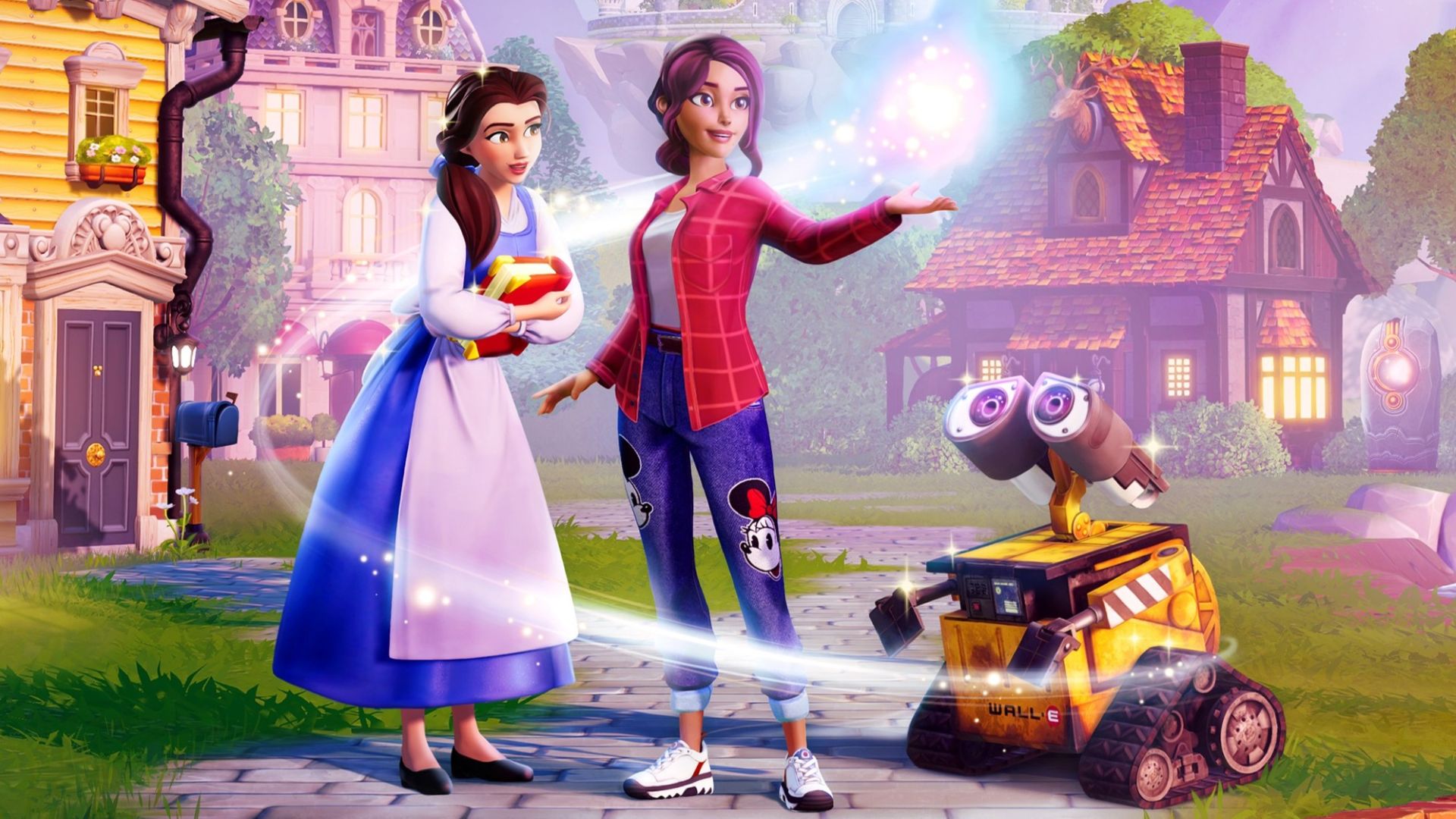
Disney Dreamlight Valley is one of those games that can catch you off guard. You start with a simple goal. Clear a few thorns. Plant a few carrots. Help Goofy get his stall running again. Then, somehow, it is midnight, your storage is full of oregano, and you are rearranging a little plaza so Remy’s restaurant looks better next to a fountain. That is the pull. It is gentle, familiar, and weirdly sticky.
As of 2026, this is still one of the easiest cozy games to recommend to people who like Disney, light life sims, and that “just one more task” feeling. But it is not a perfect fit for everyone. The game is warm and charming, sure, yet it also asks for patience. There is grind. There is back-and-forth questing. And yes, there are still moments where the whole thing feels a little more like digital housekeeping than adventure.
Still, when it clicks, it really clicks. Few games are this good at turning small routines into comfort food. You fish with Goofy, cook with Remy, decorate a beach path, snap a photo in a new outfit, and feel like you spent your evening inside a Sunday-morning cartoon. That is not nothing. In fact, that is the whole appeal.
So, is Disney Dreamlight Valley worth buying now? For a lot of players in the U.S., yes. But there is a catch, and it depends on what kind of cozy game you want. If you want a relaxed Disney-flavored loop with decorating, collecting, and steady updates, this could be your thing. If you want deep farming systems, tight action, or meaningful co-op, you may bounce off it faster than you expect.
The short version
| Area | Verdict |
|---|---|
| First impression | Warm, inviting, and easy to get into |
| Daily gameplay | Comforting, but very task-heavy |
| Character charm | One of the game’s strongest points |
| Decorating | Excellent if you love tweaking layouts for hours |
| Quest structure | Fun at first, repetitive later on |
| Multiplayer | Nice extra, not a full social sandbox |
| Performance | Better than it used to be, still not flawless |
| Overall | A cozy, charming game with real staying power and a few rough edges |
What kind of game is this, really?
At heart, Disney Dreamlight Valley is a life sim with adventure-game framing. You restore a broken valley, help Disney and Pixar characters recover their memories, gather materials, cook, fish, garden, mine, decorate, and slowly turn a gloomy place into something cheerful again. The story gives you reasons to keep moving, but moment to moment, this is a loop-driven game.
That loop looks something like this:
- Do a few friendship or story quests
- Collect materials around the valley
- Plant and harvest crops for cash or recipes
- Upgrade buildings, stalls, and your house
- Decorate paths, yards, and whole biomes
- Check shops, events, and photo challenges
That may sound basic. Honestly, it is basic. But basic is not always bad. Think of it like making coffee at home. It is not thrilling. It is just a series of small motions that feel good because they are familiar. Dreamlight Valley works the same way. The joy is not in one big moment. It is in the rhythm.
And that rhythm is where the game wins. It gives you a steady stream of tiny goals. None of them feel too scary. Most of them feel doable in a short session. Even when the game asks a lot from you, it rarely feels harsh. It nudges more than it pushes.
Why the game works so well when it works
The easiest reason is also the most obvious one: Disney matters here. And not in a lazy, sticker-on-the-box way. The game understands that players are not just showing up for recognizable faces. They want mood. They want little emotional hits. They want WALL•E rolling across the valley and making the place feel sweeter without saying much at all. They want Goofy to be Goofy. They want Remy’s kitchen to feel busy and cozy. They want familiar places to feel like home, even if they have never seen them in 3D before.
The writing helps. It is rarely brilliant, but it is usually light on its feet. Characters sound like themselves. Conversations have enough humor to avoid feeling flat. And the game knows how to turn fan service into routine comfort. That is harder than it looks.
Then there is decorating, which may be the real endgame for a lot of players. If you are the kind of person who opens a builder game and immediately starts moving trees, this is where Dreamlight Valley earns its keep. You can shape neighborhoods, line streets with lamps, build little gardens, set up themed corners, and keep fussing with your layout until everything feels right. It scratches the same itch as Animal Crossing, but with more obvious Disney flair and more visual drama.
There is also a nice sense of ownership. This valley slowly starts to feel like your version of the place, not just a copied map. That matters. Cozy games live or die on whether they create attachment. This one does.
And then there is the tone. Dreamlight Valley is not trying to be cool. That helps. It is sincere. Sometimes almost corny. But in a market full of games that wink at the camera a little too hard, that sincerity feels kind of refreshing.
But the grind is real, and that will test some players
Here is the part fans sometimes soften a little too much: Dreamlight Valley can be a grind machine. A cute one, yes. A charming one. But still a grind machine.
A lot of quests ask for the same kinds of chores. Gather this wood. Cook these meals. Bring those gems. Plant these crops. Wait for things to grow. Return to the same character. Go back again because you missed one item. It can start to feel like you are running errands inside a toy box.
Sometimes that is relaxing. Sometimes it feels like busywork wearing mouse ears.
The game also leans heavily on inventory management, storage planning, and material hunting. If that sounds soothing to you, great. If not, there will be evenings where the whole thing feels less like a magical valley and more like a part-time job with pumpkins.
The biggest pain points are usually these:
- Too many fetch-style objectives in a row
- Frequent stops to gather basic materials
- Storage and inventory headaches if you do not organize early
- Some friendship quests that drag longer than they should
- A premium shop and event structure that can make the game feel a bit “always on”
That last point is worth sitting with for a second. The game is not pay-to-win in the usual sense, and core progress is still tied to playing, not paying. But the premium cosmetics and event cadence do create a live-service mood. You notice it. You feel it. Even if you ignore the shop, it is there in the background, tapping your shoulder.
And look, for some players that is fine. They like checking in every week. They like rotating challenges and fresh items. Others just want a cozy game they can own, enjoy, and leave alone for a month without feeling behind. Dreamlight Valley sits a little awkwardly between those two moods.
Character charm carries a lot of weight
One reason many players stick around anyway is simple: the villagers are good company. Not every quest is memorable, but many character moments are. You end up building silly little routines around them. Maybe you always stop by Mickey’s place first. Maybe you keep gifting flowers to Minnie because it is easy. Maybe you like hanging out with Scar because the game gets a little sharper when he is on screen.
That rhythm of friendship still works. It gives the game a low-stakes emotional core. Nobody is asking you to save the universe every 10 minutes. Mostly, you are helping people get settled, work through minor messes, and feel at home. It is soft stuff. But soft stuff can stick.
And this is where Dreamlight Valley separates itself from a lot of imitators. Many cozy games can copy farming, crafting, or decorating. Not many can give you that odd little feeling of seeing a Disney character wander by at sunset while your valley lights turn on. It is sentimental. Maybe even a bit cheesy. But yeah, it works.
Performance in 2026: improved, though not spotless
This is the most annoying part of the review, because the answer is not clean. Dreamlight Valley has improved over time, and that matters. It has had quality-of-life changes, new features, and more polish than it had in its earlier stretch. The game feels more stable than it once did.
But “more stable” is not the same as “perfect.” You may still run into hiccups, especially if your valley gets crowded, heavily decorated, or just plain busy. Menus can feel clunky. Load times and movement can still feel uneven depending on where and how you play. So no, this is not the kind of game I would call technically pristine.
That said, it is easier to live with now. And if you are the sort of player who values mood over mechanical sharpness, you may forgive a lot. Cozy fans often do. The bigger question is whether the little stumbles break the spell for you. For some people, they do. For others, not really.
Multiplayer is nice to have, but it is not the main event
If you are hoping for a deep co-op game, lower your expectations. Dreamlight Valley’s social features are pleasant, not massive. Visiting another valley, showing off your design choices, trading a few things, or checking someone else’s store rotation can be fun. It adds life. It gives the game a community pulse.
But the core of Dreamlight Valley is still solo play. This is still your valley, your chores, your layout, your collection habits. Multiplayer adds flavor more than structure.
That is not a flaw by itself. It just depends on what you want. If your dream game is “Animal Crossing with more active co-op,” this may feel thinner than expected. If you mainly want a personal comfort game with occasional social extras, it lands much better.
How it compares to other cozy games
The easiest comparison is Animal Crossing: New Horizons. Both games care about routine, aesthetics, collecting, and low-pressure play. But Dreamlight Valley is more guided. It gives you more quests, more direct objectives, and more story rails. Animal Crossing is calmer and more open-ended. Dreamlight Valley is busier and more curated.
Compared with Stardew Valley, Dreamlight Valley is much lighter on systems depth. It has less mechanical bite and less player freedom in how you build your life. Stardew can become a whole private obsession. Dreamlight Valley is simpler, easier to read, and more focused on comfort than mastery.
Compared with The Sims, it is not even the same kind of fantasy. The Sims gives you social chaos and control over little lives. Dreamlight Valley gives you a themed neighborhood, soft errands, and steady progress. Less drama. More glitter.
| Player type | How Dreamlight Valley fits |
|---|---|
| Disney fan | Very strong fit, especially if the characters matter to you |
| Decorating addict | Excellent fit; this may become your whole hobby for weeks |
| Story-first player | Decent fit, but do not expect heavy drama or deep role-play |
| Multiplayer-first player | Only a partial fit; solo play is still the main draw |
| Stardew-style systems fan | Mixed fit; this game is much lighter and more guided |
| Player with low patience for grind | Probably not the best match |
| Family or casual household player | Strong fit, with a few caveats about purchases and pacing |
Is it good for kids and families?
Mostly, yes. It is friendly, readable, and easy to understand in short bursts. The tone is welcoming. The structure is clear. And the Disney familiarity helps younger players settle in quickly.
Still, adults should know what kind of game this is. It includes online features, rotating events, and premium cosmetics. None of that makes it unsuitable. It just means this is not a sealed little offline toy. It is a modern service-style game with a cozy shell.
For families, the good news is that the game is rarely stressful. There is no harsh fail state hanging over you. Most tasks can be done at your own pace. If your household likes games that feel safe, bright, and low-pressure, Dreamlight Valley has a strong case.
Who should buy it, and who should skip it?
Here is the cleanest way to put it. Buy it if you want a game that feels like a daily ritual. Skip it if you want a game that constantly surprises you.
- Buy it if Disney characters genuinely make you smile
- Buy it if you love decorating and collecting more than action
- Buy it if you want a cozy solo game with a long tail
- Skip it if fetch quests wear you out fast
- Skip it if technical hiccups ruin your mood
- Skip it if you need deep co-op or deeper sim systems
And one more thing: if you are curious but unsure, start with the base experience rather than going all-in right away. Dreamlight Valley tells you pretty quickly whether you are the kind of player it wants. Usually within the first few evenings, honestly.
FAQ
Is Disney Dreamlight Valley worth it in 2026?
Yes, for many players it still is. It has plenty to do, regular content support, and a strong cozy loop. Just know that it is grindy and not technically perfect.
Is Disney Dreamlight Valley free-to-play?
No. It is a paid game. It also has extra cosmetic purchases, but core story progress does not depend on buying them.
Can you play Disney Dreamlight Valley with friends?
Yes, but in a limited way. You can visit valleys and share some of the social side of the game, though it still feels mostly built for solo play.
Is the game good on handheld or couch play?
It can be. The relaxed structure suits shorter sessions really well. The main thing to watch is performance and menu feel, which may matter more to some players than others.
Are microtransactions a big problem?
They are more noticeable than some cozy fans would like, but they are mostly tied to cosmetics and optional extras. They do not define the whole game, though they are part of its mood.
Is it better than Animal Crossing?
Not really better or worse across the board. It is more guided, more quest-heavy, and more Disney-focused. Animal Crossing feels looser and calmer.
Should kids play Disney Dreamlight Valley?
For many families, yes. It is welcoming and easy to follow. Parents may still want to keep an eye on online features and optional spending.
Conclusion
Disney Dreamlight Valley is cozy in a very specific way. Not cozy like a game that leaves you fully alone. Cozy like a game that hands you a long to-do list, wraps it in Disney charm, and somehow makes chores feel soothing. That is the trick. That is also the risk.
When the game is at its best, it feels generous, bright, and hard to put down. You make small improvements, see familiar faces, and slowly shape a valley that feels personal. It has a nice emotional hum to it. It is easy to come back to. Easy to recommend to the right person.
When it is at its weakest, it feels repetitive, slightly fussy, and more store-aware than some cozy players will love. The quests can drag. The grind can show its teeth. And the technical side still is not as smooth as it should be.
Even so, I come away positive on it. Not blindly positive. Not “everyone must play this” positive. More like this: if you want a comfort game with Disney warmth, decorating freedom, and a steady stream of little goals, Disney Dreamlight Valley is still one of the better options out there. It is not flawless. It is not always elegant. But it has heart, and that goes a long way.
Leave a Reply