

The Psychology Behind Dad From Inside Out
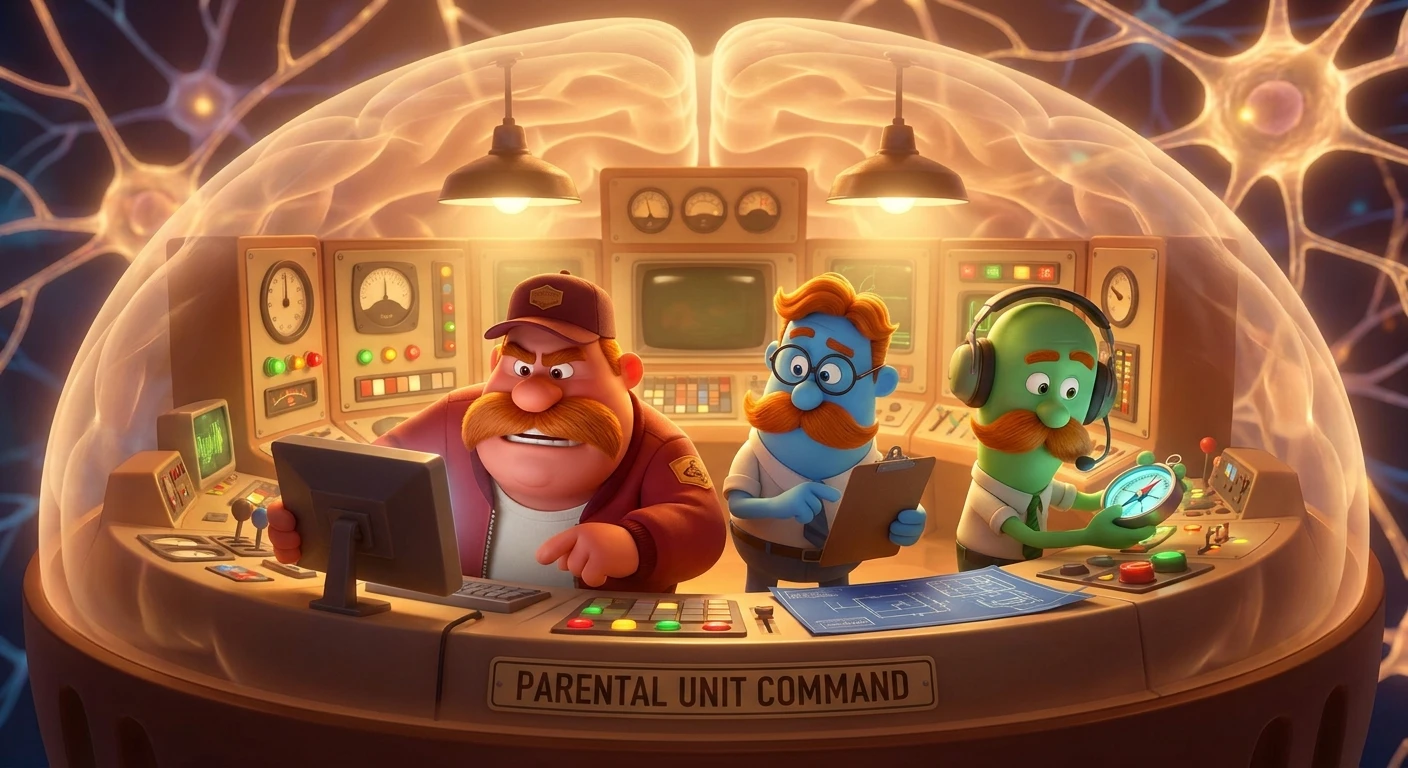
When you analyze the brilliant emotional mechanics of Pixar’s animated universe, understanding Dad From Inside Out is absolutely essential to grasping the film’s core message. Voiced by the talented Kyle MacLachlan, Bill Andersen represents a masterclass in portraying realistic parental stress, emotional architecture, and the delicate balance of raising a teenager. Right from the first frame, the film uses this character to ground the whimsical, abstract concepts of the human mind in something deeply relatable and tangible. The thesis here is simple but profound: the father’s internal emotional command center serves as a deliberate, mature contrast to Riley’s chaotic, developing mind, highlighting how adults process high-pressure situations, manage external expectations, and occasionally stumble in their familial communications.
We all know how challenging a major life transition can be. Moving a family from Minnesota to San Francisco to launch a tech startup places immense strain on anyone. Through the lens of this character, we get a front-row seat to the invisible mental load carried by parents. His emotional headquarters, visually distinct and militaristic, offers a fascinating commentary on executive function and emotional regulation. By exploring his mind, we gain invaluable insights into how adults navigate conflict, protect their loved ones, and sometimes completely miss the subtle emotional cues right in front of them.
Read also: The Ultimate Guide to the Most Popular Pokémon Ever; The Best life sim Strategy Guide.
The sheer genius of Pixar lies in how they animate these invisible struggles. Every sigh, every distracted glance, and every sudden burst of authority from the father is backed by a highly organized, albeit sometimes flawed, internal system. Understanding his character is not just about enjoying a great movie; it is about recognizing the universal realities of adult responsibility.
The Core Emotional Mechanics and Family Dynamics
To truly appreciate how this character functions, we need to examine the specific ways his mind operates compared to his family members. The film provides a brilliant value proposition for viewers: by observing the different command centers, you gain immediate, intuitive understanding of each person’s current life phase and emotional baseline. For example, while Riley’s mind is a vibrant, shifting landscape led by Joy, her father’s mind is a structured, uniform boardroom led by Anger. This does not mean he is a furious or toxic person; rather, Anger in his context acts as a decisive, protective force that drives action and establishes boundaries during times of extreme stress.
Consider these two primary examples of his emotional system in action. First, during the infamous dinner table scene, his focus is entirely consumed by a memory of a hockey game, demonstrating how adult minds often compartmentalize stress by escaping into familiar, low-stakes entertainment. Second, when Riley acts out, his Anger takes the wheel to enforce discipline, treating the situation like a military escalation. This defensive posture is a classic psychological response to feeling out of control in other areas of life, such as his struggling startup.
| Character | Leading Emotion | Command Console Style |
|---|---|---|
| Bill (Dad) | Anger | Regimented, military-style controls |
| Jill (Mom) | Sadness | Collaborative, empathetic round table |
| Riley | Joy | Expansive, dynamic, constantly shifting |
Here are the key moments that perfectly showcase his complex emotional state:
- The DEFCON Escalation: When Riley rolls her eyes at the dinner table, the father’s internal team treats the disrespect as a literal military threat, escalating their response levels until he firmly ‘puts the foot down.’
- The Monkey Impression: When trying to cheer Riley up in the empty San Francisco house, we see his joyful, playful side attempt to reconnect using a nostalgic childhood routine, showing his desperate desire to maintain their bond.
- The Hockey Tryouts: His sheer enthusiasm and anxiety during Riley’s hockey tryout perfectly encapsulate the protective, supportive nature of his character, blending his own love for the sport with his hope for her happiness.
Origins of the Character Design
The creation of Dad From Inside Out involved extensive psychological research and creative brainstorming by director Pete Docter and the Pixar animation team. Initially, the creators debated how to visually represent the minds of the parents without overshadowing Riley’s journey. They needed the parents to serve as emotional anchors. The design of the father’s internal headquarters was deliberately modeled after a 1950s Cold War war room, complete with rigid structures and matching uniforms. This aesthetic choice instantly communicates stability, rigidity, and the heavy burden of providing for a family. The animators gave all of his emotions a signature mustache, an incredibly clever visual shorthand indicating that, unlike teenagers whose emotions are wildly distinct and chaotic, his identity has consolidated into a singular, unified adult persona.
Evolution Through Production
During the early drafting phases of the script, the relationship between Riley and her parents was much more antagonistic. Early storyboards featured harsher conflicts. However, the story trust realized that for the emotional climax to work, the audience needed to deeply empathize with the parents. Bill Andersen evolved from a generic strict authority figure into a loving, overwhelmed man trying his absolute best in a highly volatile situation. The inclusion of his financial and professional stress—moving for a startup—was added to give his internal Anger a logical, sympathetic reason for being in charge. He is not mad at his family; he is fiercely trying to hold their lives together.
Modern State in Pop Culture
Today, this character has achieved legendary status in pop culture, largely due to the viral ‘sports game in the head’ meme. The scene where his wife attempts to silently communicate with him, only to find his mind entirely occupied by a memory of a hockey game, resonated so universally that it became one of the film’s most shared clips. It perfectly captures a specific type of comedic domestic disconnect. Beyond memes, psychologists and therapists frequently use his character as an accessible teaching tool to explain cognitive load, compartmentalization, and the ways stress manifests in adult relationships.
Psychological Architecture of His Mind
To fully grasp the brilliance of the character, we must examine the psychological architecture of his mind. In cognitive psychology, the concept of ‘executive function’ refers to the mental skills that include working memory, flexible thinking, and self-control. Inside his head, we see a highly refined version of this. While Riley’s emotions fight for control of a small, single-user console, the father’s emotions sit at an expanded, multi-station console. They operate as a synchronized unit. Even though Anger is the nominal leader, he acts more like a firm project manager than a tyrant. This represents a mature psychological state where emotions no longer battle for dominance but work in a coordinated, albeit sometimes stubborn, framework to ensure survival and stability.
Neurological Stress Responses
The film brilliantly illustrates neurological fight-or-flight responses. When the mother signals for backup during the dinner argument, the father’s mind is temporarily entirely offline, hijacked by distraction. When forcibly pulled back to reality, his immediate response is driven by adrenaline and defensiveness. Anger takes the controls not out of malice, but because boundary-setting is the fastest, most efficient way to regain control of a chaotic environment. This is a perfect visualization of how chronic stress reduces our capacity for nuanced empathy, forcing the brain to rely on blunt, immediate reactions.
- Adult command consoles are wider and allow multiple emotions to operate simultaneously, reflecting complex adult processing.
- The leading emotion of Anger masks underlying anxieties about financial security, acting as a shield rather than a weapon.
- The shared physical traits (mustaches) symbolize a fully integrated ego and self-concept, where emotions share a common identity.
- His emotions exhibit extreme situational awareness, constantly scanning for threats to the family’s structural integrity.
- The ‘putting the foot down’ sequence perfectly maps to the amygdala hijack, where rational thought is temporarily bypassed by an emotional response.
Step 1: Recognize Emotional Shifts
Parenting teenagers requires acute observational skills. The first step to managing family dynamics, a lesson directly learned from Bill’s missteps, is learning to recognize when a child’s emotional baseline shifts. When Riley went quiet at the dinner table, Bill missed the micro-expressions of distress because he was internally distracted. Being present and actively scanning for these subtle changes can prevent massive communication breakdowns.
Step 2: Put Down the Mental Distractions
We all have our internal hockey games. Whether it is work stress, financial worries, or literal sports, adults carry heavy cognitive loads. Step two requires consciously putting down these mental distractions when engaging with family. You have to step away from your own internal command console and focus entirely on the physical room you are in to provide genuine emotional support.
Step 3: Establish Playful Routines
Even in the midst of extreme stress, finding moments for play is crucial. The monkey impression scene is a prime example of attempting to use established, joyful routines to bridge an emotional gap. Keep these shared languages alive. They act as emotional safety nets when logic and conversation fail to reach a struggling child.
Step 4: Respond, Do Not React
When pushed into a corner, Bill’s internal team reacted by escalating the conflict to DEFCON 4. Step four is about training your mind to pause. Between the stimulus of a teenager’s eye-roll and your response, there is a fraction of a second where you can choose empathy over authority. Choosing to respond calmly rather than reacting defensively changes the entire trajectory of an argument.
Step 5: Share the Control Console
No single emotion should drive every interaction. While structure and firmness (Anger) have their place, relying solely on them creates a sterile environment. Actively invite empathy (Sadness) and Joy to the console when dealing with family trauma, such as a major move or a sudden life disruption. Balance is the key to healthy emotional leadership.
Step 6: Apologize When You Disconnect
One of the most powerful moments for any parent is the willingness to admit fault. When a disconnect happens, own it. Acknowledge that your mind was elsewhere, or that you reacted too harshly. This models healthy emotional regulation for the child, proving that even a structured adult mind is capable of course correction and vulnerability.
Step 7: Foster Shared Passions
Shared interests act as powerful emotional glue. For Bill and Riley, ice hockey is more than just a sport; it is a fundamental pillar of their relationship. Nurturing these shared passions provides a safe, neutral space to rebuild trust and connection when direct emotional conversations feel too overwhelming.
Myth: His primary emotion of Anger makes him a toxic, inherently bad father.
Reality: In the context of the film’s psychological metaphor, his Anger represents structure, decisiveness, and boundary-setting. He uses this emotion to protect his family and enforce rules during a highly stressful transitional period, not out of malice or abuse.
Myth: He routinely ignores his wife and does not care about her emotional signals.
Reality: The famous dinner scene shows an isolated moment of comedic distraction, which is a universally human flaw. Throughout the rest of the narrative, he is shown as a dedicated, supportive partner working alongside her to navigate their new reality.
Myth: His adult mind is simpler and less imaginative than his daughter’s mind.
Reality: His internal console is actually an upgraded, highly efficient adult version. The emotions work as a cohesive, unified team rather than individuals fighting for control, representing mature psychological consolidation.
Who voices the father?
The character is voiced by the legendary actor Kyle MacLachlan, who brings a perfect blend of warm paternal energy and comedic timing to the role.
What is the character’s real name?
According to the film’s official credits and lore, his name is Bill Andersen.
Why is Anger his main emotion?
Anger acts as his primary driver because, as the head of the household navigating a high-stakes startup launch, his mind relies on decisiveness, structure, and protective instincts to manage daily pressures.
What does he think about during the dinner argument?
His mind is completely absorbed by a memory of a high-stakes ice hockey game, showcasing how adults often use mundane entertainment to decompress.
Are his internal emotions visually different from Riley’s?
Yes, all of his emotions feature a signature thick mustache, which symbolizes his unified adult identity and cohesive personality.
Why did he move the family to San Francisco?
He relocated his family from Minnesota to San Francisco to launch a new technology startup, which is the primary source of the family’s stress.
What sport does he bond with Riley over?
Ice hockey is the central shared passion between them, serving as a core memory and a vital bonding activity.
How does he try to cheer Riley up?
He attempts to engage her by doing a goofy, nostalgic monkey impression, a playful routine from her childhood.
Does he appear in any short films?
Yes, he plays a major role in the short film ‘Riley’s First Date?’, where his emotional command center goes into overdrive evaluating a teenage boy.
Is his Joy ever shown taking charge?
While Anger is the default leader, his other emotions absolutely take charge during moments of playfulness, celebration, and deep family bonding.
Understanding Dad From Inside Out offers a profoundly rich perspective on animated storytelling and psychological representation. He is far more than just a background character or a walking punchline; he is a meticulously crafted representation of adult responsibility, emotional load, and enduring parental love. Pixar managed to distill the complex, often messy reality of fatherhood into a vibrant, accessible visual metaphor that resonates with audiences of all ages. The next time you watch the movie, pay close attention to his subtle expressions and the frantic teamwork happening inside his head. Embrace the lessons his character offers, and take a moment to appreciate the incredible depth hidden within this cinematic masterpiece today!
Leave a Reply