
The Truth About Daybreak Season 2
Fans around the globe are still asking about Daybreak Season 2, holding onto hope for a return to the post-apocalyptic, fourth-wall-breaking streets of Glendale, California. When the Netflix original series first dropped in 2019, it quickly captured a dedicated audience with its quirky humor, Mad Max-style high school cliques, and a completely fresh take on the end of the world. The show masterfully combined the teen angst of Ferris Bueller’s Day Off with the survival stakes of a zombie wasteland. However, the harsh reality of streaming economics abruptly halted Josh Wheeler’s journey. Even now, years later in 2026, audiences regularly search for updates on the cliffhanger ending that saw Sam Dean unexpectedly claim the throne of the surviving factions.
This comprehensive guide breaks down exactly why the continuation never materialized, what the creators originally planned for the narrative, and how the cult following continues to keep the spirit of the series alive online. We will explore the structural dynamics of the show’s unique universe, the biological fiction behind the mindless adult “Ghoulies,” and everything you need to know to find closure after that shocking finale. Grab your makeshift armor and a skateboard, because understanding the full scope of this canceled masterpiece requires looking closely at both the on-screen fiction and the behind-the-scenes business decisions.
Read also: The legend of the white dragon release date; The Ultimate Guide to the Most Popular Pokémon Ever.
The Narrative and Cultural Impact of the Series
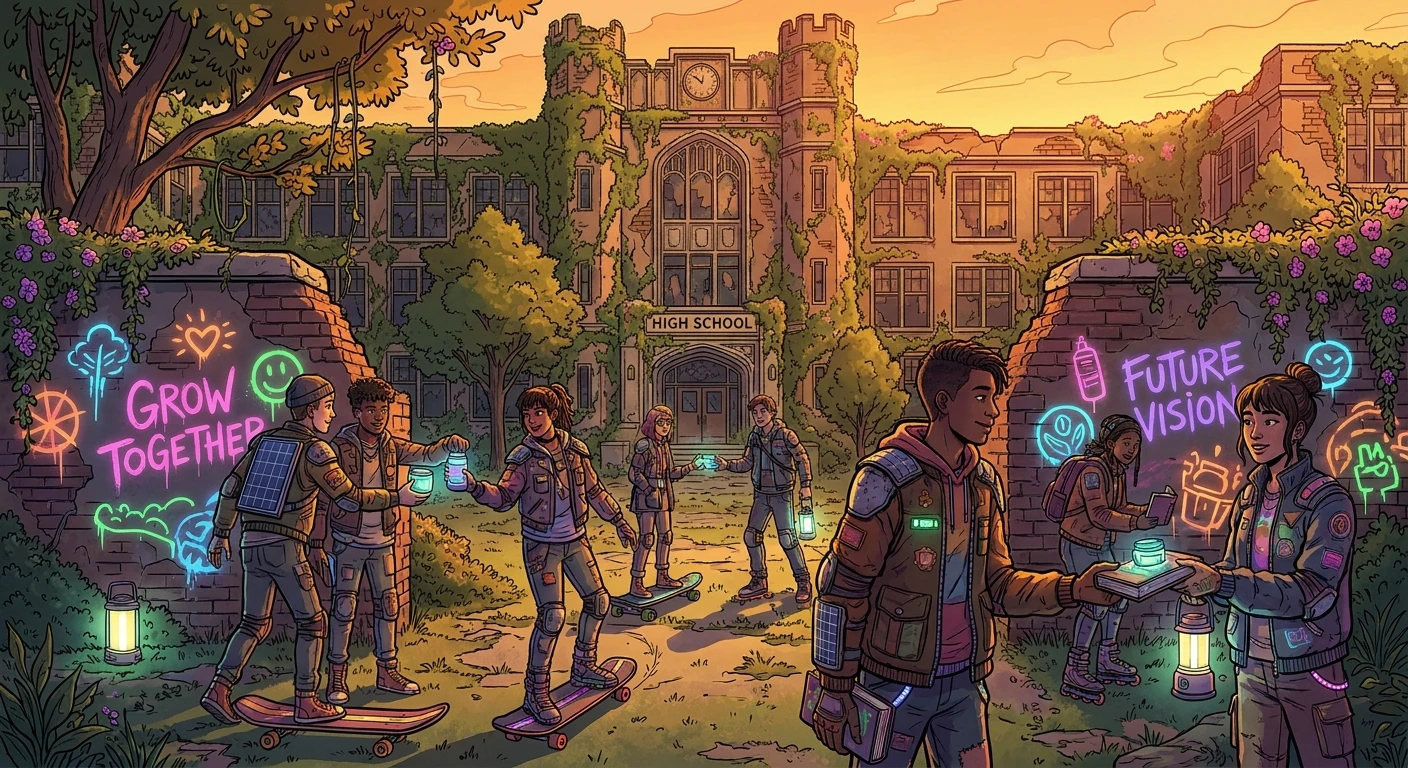
To truly grasp the disappointment surrounding the lack of a second installment, you have to look at the immense world-building the writers achieved in just ten episodes. The show did not just give us a generic apocalypse; it provided a highly structured sociological playground where high school stereotypes became literal warring tribes. The Jocks became heavily armored gladiators, the Cheerleaders transformed into fierce Amazonian warriors, and the STEM club morphed into a technologically advanced survival unit. This tribal system offered a massive canvas for future storytelling. Had the network approved the continuation, audiences would have watched these factions navigate a completely new power dynamic under Sam Dean’s controversial leadership.
The value proposition of the show rested on its distinct refusal to take itself too seriously while still delivering emotional character arcs. It gave viewers multiple protagonists, seamlessly shifting perspectives from episode to episode. Here is a breakdown of how the primary factions were positioned to evolve:
| Faction Name | Season 1 Status | Projected Future Path |
|---|---|---|
| The Daybreakers | Newly formed, struggling for unity | Underground resistance against Sam Dean |
| The Jocks | Leaderless after Turbo’s defeat | Fractured into smaller, chaotic mercenary groups |
| The Cheermazons | Allied with Josh, fiercely independent | Diplomatic power players holding the middle ground |
Despite this rich narrative potential, the streaming service decided to pull the plug just weeks after the premiere. Why did a show with such a vocal fanbase fail to secure a renewal? The decision came down to several strict internal metrics that govern modern television production:
- Completion Rates: Netflix heavily weighs how many viewers finish a season within the first 28 days. While many started the series, the initial completion drop-off missed the target threshold.
- Production Costs: Filming a post-apocalyptic landscape with elaborate practical effects, large ensemble casts, and CGI monsters is incredibly expensive compared to standard teen dramas.
- Algorithm Placement: The show struggled to find a single defining genre. Because it blended comedy, horror, romance, and action, the algorithm had difficulty pushing it to a consolidated target audience.
Origins of the Comic
The eccentric universe of Glendale did not begin in a Hollywood writers’ room. It originated in the mind of indie comic creator Brian Ralph. Published in 2011, the original graphic novel was a stark, black-and-white indie darling. Unlike the colorful, hyper-verbal television adaptation, Ralph’s comic was a mostly silent, atmospheric experience. It used a unique first-person perspective, where the reader essentially acts as the silent companion to the protagonist, Josh. The comic focused on quiet moments of survival, scavenging for food, and the grim reality of a ruined landscape. It lacked the neon-soaked, pop-culture-heavy dialogue that the television version later became famous for.
Evolution to the Screen
When producers Aron Eli Coleite and Brad Peyton adapted the material, they made massive stylistic changes to fit a television format. They injected the narrative with bright, vibrant colors, emphasizing that the apocalypse was actually a liberation for these teenagers. The high school hierarchy was expanded into literal warlord factions, and the concept of breaking the fourth wall was introduced to give Josh a distinct, Ferris Bueller-esque voice. This evolution shifted the tone from a bleak survival story to a chaotic, joyful celebration of youth navigating an adult-free world.
The Modern State of the Fandom
Even in 2026, the community surrounding the show refuses to quietly fade away. Social media platforms, particularly TikTok and Reddit, frequently see resurgences in popularity for the series. Fan-made edits of characters like Wesley Fists and Angelica go viral, introducing the canceled series to new waves of viewers who inevitably hit the same cliffhanger frustration. Petitions on Change.org demanding a revival or a wrap-up movie have amassed thousands of signatures. While a full studio return is off the table, the passionate fan fiction community continues to write expansive continuations of the story, proving that the characters struck a lasting chord.
The Biological Mechanics of the Apocalypse
One of the most fascinating aspects of the series is its fictional science. The nuclear or biological event that triggered the end of the world did not indiscriminately destroy life; it specifically targeted adult biology. When the bombs fell over California, anyone who had passed through puberty was mutated into a mindless, bloodthirsty creature known as a “Ghoulie.” The teenagers, however, were entirely spared from the mutation, left to inherit the ashes of society. The writers cleverly used biological science fiction to craft a coming-of-age metaphor: adults literally become brain-dead monsters, leaving the youth to fix the broken world.
Sociological Restructuring in Glendale
The fictional science extends to how the characters adapt to their new environment. Without adult supervision, the teenagers immediately default to the tribal structures they knew best: high school cliques. Here are the core biological and sociological facts established by the show’s lore:
- Neuroplasticity Defense: The prevailing theory within the show’s universe is that the actively developing brains of teenagers made them immune to the atmospheric mutation.
- The HPV Vaccine Anomaly: A recurring joke and plot point implies that a specific batch of the HPV vaccine might have interacted with the fallout, contributing to the immunity of certain students.
- Ghoulie Echolalia: Unlike traditional zombies, the mutated adults repeat the last mundane thoughts or phrases they had before the bombs fell, showcasing a haunting remnant of their former humanity.
- Accelerated Adaptation: Characters like Angelica demonstrate how quickly younger generations can adapt to trauma, utilizing advanced chemistry and engineering to survive.
Step 1: Read Brian Ralph’s Original Graphic Novel
Since the television narrative is definitively closed, the absolute best place to start your recovery process is by going back to the source material. Brian Ralph’s comic offers a completely different tone. While it does not feature the same colorful factions, it provides a fascinating look at the foundational bones of Josh Wheeler’s story. It is a quick, highly engaging read that satisfies the post-apocalyptic itch.
Step 2: Stream Sweet Tooth on Netflix
If you loved the unique blend of childhood innocence and dark apocalyptic survival, Sweet Tooth is the perfect spiritual successor. It shares a lot of tonal DNA with the Glendale wasteland, focusing on youth navigating a world ruined by adults, complete with stunning cinematography and heartfelt character moments.
Step 3: Immerse Yourself in Alice in Borderland
For those who preferred the high-stakes survival games and the intense faction politics, Alice in Borderland offers a more mature, deadly version of those themes. The tribal dynamics of the “Beach” in season one perfectly mirror the high school clique warfare, providing that complex sociological drama.
Step 4: Engage with the Fan Fiction Community
Archive of Our Own (AO3) and Wattpad host thousands of fan-written continuations that pick up exactly where the finale left off. Many of these stories brilliantly explore Sam Dean’s rule over the jocks and Josh’s attempts to form a resistance. It is a fantastic way to find closure through community creativity.
Step 5: Follow the Creators’ New Projects
Brad Peyton and Aron Eli Coleite have both moved on to other fascinating projects in the science fiction and fantasy spaces. Following their careers ensures you will find new shows that utilize their specific brand of fast-paced, character-driven storytelling.
Step 6: Analyze the Surviving Writers’ Outlines
Shortly after the cancellation, various writers shared tidbits online about what they had planned. Tracking down these interviews and podcast appearances gives you a clear picture of the intended character arcs, including Wesley’s journey and Angelica’s continued scientific experiments.
Step 7: Re-watch with a New Perspective
Now that you know the ending is abrupt, re-watching the ten episodes allows you to appreciate the journey rather than waiting for a resolution. You can spot the subtle foreshadowing of Sam Dean’s ultimate decision, making her final power grab feel incredibly earned rather than a random twist.
Myths & Reality
The internet is full of misinformation regarding the fate of the franchise. Let us clear up the most persistent rumors.
Myth: Another streaming network bought the rights and is secretly filming new episodes.
Reality: Netflix holds the exclusive distribution rights to the television adaptation. No other network can legally produce or broadcast a continuation without a massive, unprecedented buyout.
Myth: The script for the second installment was completely filmed but locked in a vault.
Reality: The writers’ room had only just begun outlining the next arcs when the cancellation call came in. Not a single frame of new footage was ever shot.
Myth: The show was canceled due to overwhelmingly bad reviews.
Reality: The series actually holds a solid critical rating and a highly positive audience score. The cancellation was strictly a financial decision based on the algorithms of internal viewership completion metrics, not artistic merit.
Frequently Asked Questions
Is there any chance of the series returning?
No. As of 2026, the cast has aged out of their teenage roles, sets have been dismantled, and contracts have long expired. The television iteration is permanently finished.
Will there be a wrap-up movie?
While fans have heavily petitioned for a two-hour movie to tie up loose ends, Netflix has shown zero interest in funding a feature film for a property that was canceled years ago.
Why did the adults turn into Ghoulies?
The biological warfare specifically targeted the genetic markers and hormones associated with fully completed puberty, mutating mature biology while leaving actively growing teenagers unharmed.
Did Sam Dean become the villain?
The creators stated that Sam was not necessarily a “villain,” but rather a pragmatist who realized that simply returning to the old ways of society under Josh’s idealistic vision would not ensure long-term survival.
Where was the show actually filmed?
Despite being set in Glendale, California, the vast majority of the production, including the expansive desert high school sets, was filmed on location in Albuquerque, New Mexico.
Is the original comic different from the show?
Drastically. The comic is a black-and-white, mostly silent indie story focused on bleak survival, lacking the neon aesthetic and fourth-wall-breaking humor of the adaptation.
How many episodes currently exist?
There are exactly 10 episodes in the single available installment on Netflix.
Conclusion
The legacy of this short-lived post-apocalyptic adventure remains a fascinating case study in streaming culture. While the lack of a Daybreak Season 2 will always be a source of frustration for dedicated fans, the ten episodes we received stand as a wildly creative, highly entertaining piece of television history. If you are still craving that specific mix of teen drama and wasteland survival, follow our seven-step guide above to find your next favorite watch. Share this guide with your fellow Daybreakers and keep the memory of Glendale’s wildest factions alive!
Leave a Reply