

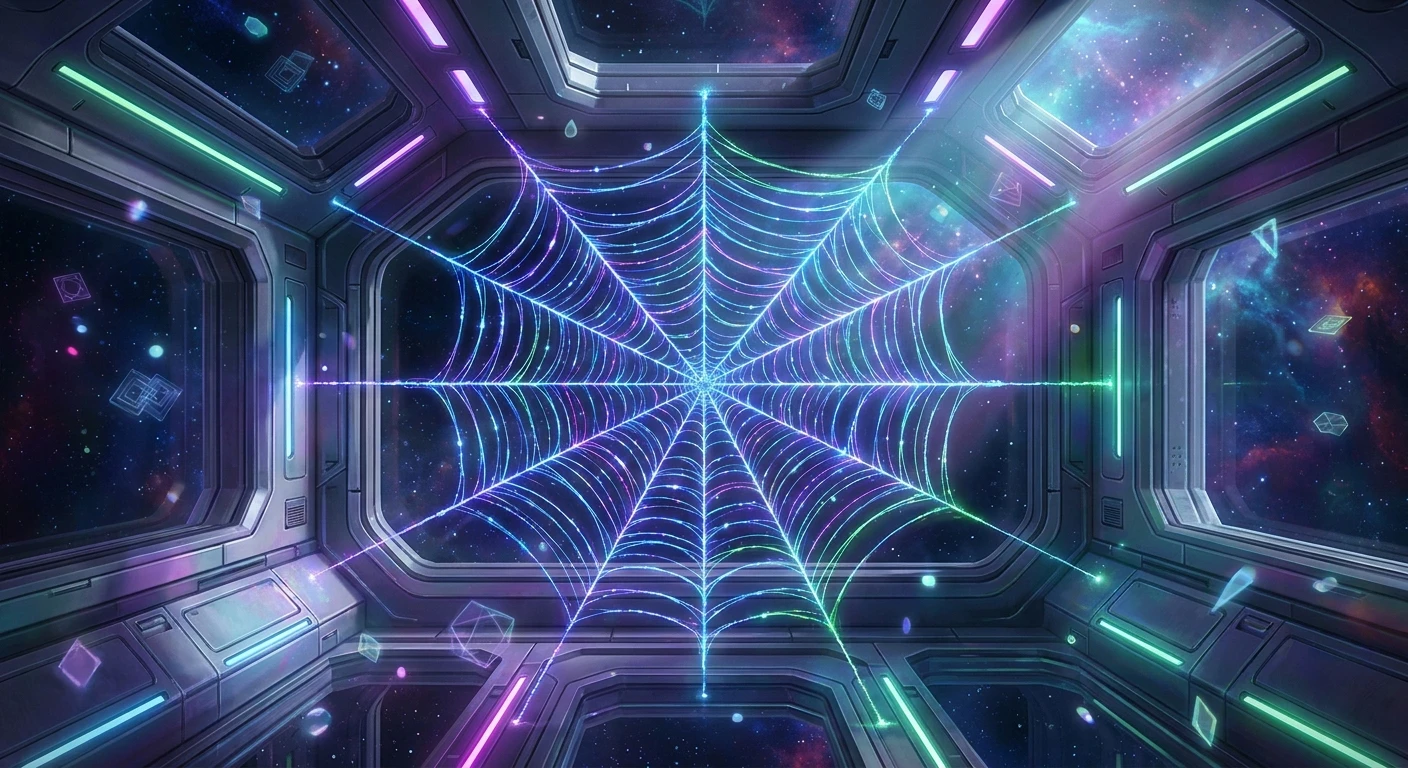
The Astonishing Adaptations of the Spaceman Spider
Have you ever wondered what happens when you take a creature entirely dependent on gravity and launch it into orbit? The concept of the Spaceman Spider is far more than just a quirky science experiment; it is a fascinating lens into the fundamental mechanics of biological life. When scientists first decided to send arachnids into the cosmos, nobody quite knew how these eight-legged astronauts would cope with a completely zero-gravity environment. The results completely reshaped our understanding of biology and spatial awareness. The Spaceman Spider represents a profound demonstration of how life forms can adapt their hardwired instincts to entirely alien environments. By examining the way these creatures adjust their web-spinning techniques without the guiding force of Earth’s gravity, researchers gather vital data on neurobiology and adaptability. We are looking at a living, breathing model of resilience. You might assume an insect or arachnid would simply fail to function, but their biological mechanisms quickly recalibrate. This ability to pivot and rewrite millions of years of evolutionary behavior in a matter of days is absolutely spectacular. Understanding this helps researchers prepare for longer human spaceflights, as the core principles of spatial orientation apply across different species. It is a brilliant story of survival, natural engineering, and the sheer willpower of life finding a way, even hundreds of miles above the surface of the Earth.
How Microgravity Reshapes Biological Engineering
Watching a Spaceman Spider figure out its new environment is a masterclass in behavioral flexibility. On Earth, gravity dictates the asymmetrical shape of a spider web. Spiders naturally build their center of gravity slightly higher so they can drop down quickly to catch unsuspecting prey. But without gravity to guide them, the Spaceman Spider initially struggles, spinning chaotic and highly disorganized threads that lack any functional structure. However, within just a few days, a remarkable shift happens. The spider begins using light as a substitute for gravity, creating perfectly symmetrical webs. This adaptation shows immense neurological flexibility and provides an incredible value proposition for researchers. For instance, early missions demonstrated that basic motor functions could recalibrate in space rapidly. Later experiments on the International Space Station proved that artificial light sources entirely dictate directional orientation when gravity is absent, effectively rewriting the spider’s internal compass.
Read also: Golden Seed Guide: Maximize Your Healing Power Today; Dad From Inside Out: The Complete Character Psychology.
| Biological Metric | Earth-Bound Arachnid | Spaceman Spider |
|---|---|---|
| Web Geometry | Asymmetrical, gravity-dependent | Symmetrical, light-guided |
| Orientation Cues | Gravitational pull (falling) | Directional illumination |
| Initial Adaptation | Immediate functional weaving | Chaotic spinning before recalibration |
The transition from chaos to order involves a specific sequence of biological adjustments. When tracking these fascinating orbital arachnids, scientists have categorized the adaptation process into distinct phases.
- Immediate Sensory Confusion: Initially, the arachnid exhibits highly erratic behavior, completely unable to determine up from down due to the lack of vestibular feedback.
- Sensory Substitution: The creature organically shifts its reliance from gravity-sensing internal organs to visual cues, specifically targeting the artificial lamps inside its habitat.
- Behavioral Recalibration: The entire web-building process shifts from an asymmetric gravity-drop design to a perfectly symmetrical geometric pattern centered around the light source.
These three steps highlight a remarkable biological computing power. The spider essentially patches its own neural software to survive, creating a web that functions flawlessly in a completely alien physics engine.
Origins of Orbital Arachnids
The story of arachnids in space begins with a surprisingly humble origin. Back in the early 1970s, a high school student proposed sending spiders to space as part of a nationwide NASA competition. This brilliant idea led to the inclusion of two cross spiders, Arabella and Anita, on the Skylab 3 mission in 1973. The scientific community was highly skeptical about whether the spiders could even survive the intense G-forces of the launch, let alone spin a web. Yet, these pioneering creatures exceeded all expectations. They provided the first concrete proof that web-spinning instincts were not exclusively tied to Earth’s gravity, opening an entirely new field of study regarding animal behavior in orbit.
Evolution of Space Habitat Design
Creating a home for a Spaceman Spider requires intense engineering. The original Skylab habitats were relatively simple aluminum boxes with basic camera setups and screen meshes. They were functional but lacked environmental controls. Over the decades, these habitats evolved massively. By the time researchers sent new spiders to the International Space Station in 2008 and 2011, the enclosures had become highly sophisticated bio-chambers. These modern habitats featured automated fruit fly dispensers to provide a steady food source, perfectly calibrated humidity controls, and advanced high-definition infrared cameras designed to record the web-building process 24 hours a day without disturbing the creatures.
Modern State of Astrobiological Entomology
Currently, the study of the Spaceman Spider has expanded beyond simple observation. The data gathered from these experiments now influences fields ranging from robotics to neurobiology. Engineers study the symmetrical web patterns spun in microgravity to develop more efficient algorithms for autonomous construction drones operating in space. Furthermore, the way spiders switch from gravity-based navigation to light-based navigation provides crucial insights into neuroplasticity. Scientists analyze this switching mechanism to better understand how human astronauts might cope with long-term sensory deprivation and spatial disorientation during future missions to Mars and beyond.
Microgravity Web Geometry
The mathematical precision of a web spun in zero gravity is genuinely stunning. On Earth, orb-weaving spiders intentionally build the hub of their web slightly closer to the top edge. They sit facing downwards, using gravity to accelerate their movement when vibrations signal that prey is caught. In microgravity, this energetic advantage completely disappears. The Spaceman Spider recognizes this lack of physical acceleration and automatically shifts to a perfectly centralized hub. Every radial thread is spaced with equal tension, forming a mathematically pure circle. This proves that the spider’s brain actively calculates tension and structural integrity dynamically, rather than just mindlessly repeating a hardcoded physical pattern.
Sensory Adaptation and Orientation
How exactly does a spider know where it is without gravity? The answer lies in their highly sensitive mechanoreceptors and slit sensilla, microscopic organs located on their legs that detect minute vibrations and tension changes. When the constant downward pull of Earth’s mass is removed, these receptors initially send overwhelming noise to the spider’s brain. To compensate, the spider forces a sensory override.
- Mechanoreceptors completely recalibrate their baseline firing rates within roughly 48 hours of initial zero-gravity exposure.
- Visual processing centers rapidly take over primary spatial mapping duties, prioritizing any directional light source as the new “up”.
- Web silk protein expression sometimes alters due to environmental stress, resulting in slightly thinner but equally strong structural threads.
- Orb-weavers demonstrate an extraordinary ability to maintain spatial memory, returning to perfectly circular constructions day after day despite floating freely in their chambers.
Day 1: Habitat Setup and Baseline Parameters
For biology students and enthusiasts looking to simulate the studies of a Spaceman Spider on Earth, a structured observation plan is highly effective. On the first day, the focus is entirely on constructing a controlled habitat. You need a secure, well-ventilated enclosure with a singular, directional light source. Establishing a baseline means observing the spider’s behavior under normal conditions. Document the exact dimensions of the web, the location of the hub, and the time it takes the spider to complete its construction. This baseline data is absolutely critical for comparing later variables.
Day 2: Environmental Calibration
The second day involves altering the environmental inputs to mimic sensory shifts. While you cannot turn off gravity, you can alter the lighting. Move the primary light source to the bottom or the side of the enclosure. Document how the spider reacts to this shifting environmental cue. In true space experiments, the lighting was on a strict 12-hour cycle to simulate day and night, ensuring the spiders maintained a regular circadian rhythm despite the lack of natural sunlight.
Day 3: Initial Observation Phase
By day three, active observation of the recalibration process begins. The spider will likely dismantle its previous web and begin anew based on the altered lighting cues. Take meticulous notes on the structural differences. Measure the asymmetry of the web hub relative to the new light source. This mimics the exact data collection methods used by astronauts aboard the ISS when monitoring their arachnid passengers during the first 72 hours of orbit.
Day 4: Microgravity Simulation Analysis
While true microgravity is impossible on Earth, day four focuses on analyzing the theoretical impacts of zero gravity on physical structures. Use the baseline data to map out how a lack of gravity would alter the tension of the silk threads. In space, spiders produce webs that are often finer but more densely packed. Study the mechanics of silk elasticity and calculate how reduced physical drag alters the required breaking strain of the anchor threads.
Day 5: Web Pattern Mapping
Day five is dedicated to pure geometry. Photograph the completed web from multiple angles. Use software or manual tracing to map the angles between the radial threads. Compare these angles to the perfect symmetry observed in the Spaceman Spider experiments. This exercise highlights the complex internal geometry the spider uses to maximize prey capture area while minimizing protein expenditure.
Day 6: Sensory Deprivation Testing
To further understand the Spaceman Spider’s reliance on light, day six involves complete visual sensory deprivation. Turn off all light sources within the controlled habitat. Without visual cues or normal gravitational orientation (in space), spiders become highly disoriented. On Earth, gravity still guides them, but observing their reliance on touch versus sight provides deep insights into the hierarchy of their sensory organs.
Day 7: Data Synthesis and Review
The final day involves compiling all the gathered data. Compare the baseline web geometry from day one against the altered states from the rest of the week. This synthesis mimics the post-mission analysis conducted by NASA scientists. Reviewing the shifts in behavior, web design, and adaptation speeds provides a comprehensive understanding of biological resilience and the incredible engineering capabilities of arachnids under environmental stress.
Myths and Reality of the Spaceman Spider
Myth: Spiders simply float around and cannot spin webs in space.
Reality: While they experience initial disorientation, they adapt remarkably fast. Within days, they successfully spin highly functional, perfectly symmetrical webs.
Myth: The radiation in space causes the spiders to mutate and grow larger.
Reality: The spiders remain completely normal in size and physiology. The carefully controlled habitats protect them from radiation, and their growth rate is entirely unaffected by microgravity.
Myth: They use the exact same silk thickness as they do on Earth.
Reality: The physical thickness of the silk can vary. Environmental stress and dietary changes in orbit often lead to the production of slightly finer silk threads.
Myth: Zero gravity permanently destroys their terrestrial spatial awareness.
Reality: Spiders possess incredible neuroplasticity. Upon returning to Earth, they initially struggle with the renewed pull of gravity but fully recover their normal asymmetric web-building instincts within a few days.
What species of spider is usually sent to space?
Scientists primarily use orb-weaver spiders, such as the Golden Silk Orb-Weaver or the Cross Spider. These species are chosen because their highly structured, geometric webs make it incredibly easy to observe and measure structural changes caused by microgravity.
How do spiders eat while in orbit?
Habitats are engineered with automated dispensers that release fruit flies into the enclosure at set intervals. The spider catches these flies in its web exactly as it would naturally do in a terrestrial garden.
Do the spiders survive the trip back to Earth?
Yes, many spiders have successfully survived the journey back. However, they naturally have relatively short lifespans, so some simply reach the end of their natural life cycle while still in orbit.
How do they drink water in zero gravity?
Water cannot simply be left in a dish because it would float away and pose a drowning hazard. Instead, astronauts provide moisture via small, saturated sponges that the spider can safely drink from.
Why do scientists care about spider webs in space?
Spider webs provide a visible, physical map of the spider’s brain function. Changes in the web structure give scientists direct, measurable data on how the central nervous system adapts to extreme environmental changes.
Do spiders get spacesick?
While they don’t vomit, they do experience a period of intense sensory confusion analogous to space motion sickness. This is evident from their initial erratic movements and disorganized spinning during the first few days.
Can a spider escape its enclosure on a space station?
The habitats are hermetically sealed with multiple layers of security mesh to ensure the spiders remain safely contained. Escaping into the broader space station is effectively impossible.
What is the biggest takeaway from these experiments?
The primary lesson is that complex biological instincts are highly adaptable. Life is not strictly rigid; it possesses an inherent, incredible ability to recalibrate to ensure survival.
Has any spider reproduced in space?
Current experiments focus on observation of adult or juvenile behavior rather than breeding. The complications of egg sac development in microgravity remain a largely unexplored frontier.
Where can I learn more about astrobiology?
NASA archives and major university databases offer extensive, publicly available logs detailing biological experiments conducted on the ISS, providing a wealth of information for curious minds.
The journey of the Spaceman Spider is a testament to the incredible durability of life. From spinning perfectly symmetrical threads guided by artificial light to overriding millions of years of gravity-dependent instincts, these creatures prove that biology is beautifully adaptable. Understanding these mechanisms helps us prepare for our own future among the stars. Start following the latest updates from the International Space Station and dive deep into the fascinating world of astrobiology today!
Leave a Reply