

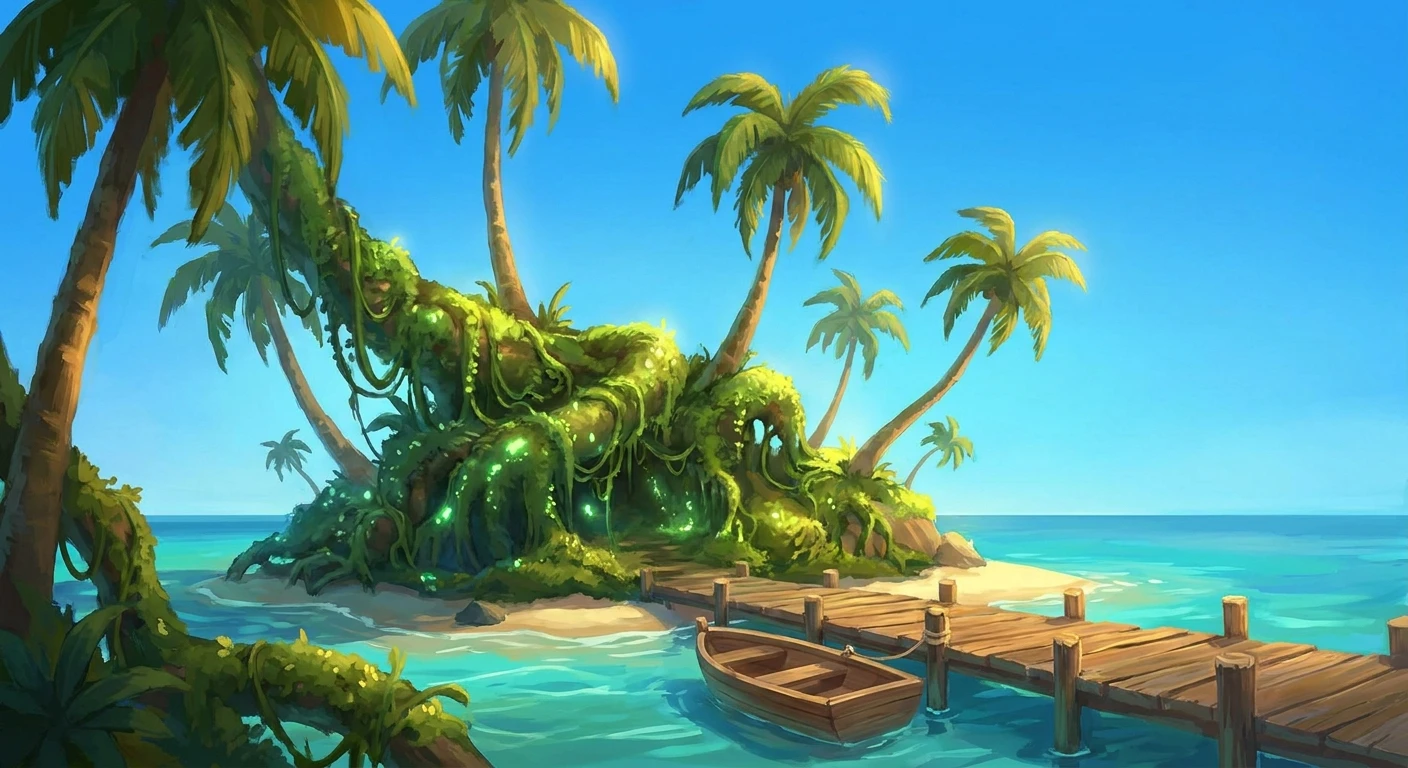
Ultimate Guide to Exploring Kapp’n Islands
Hey there! If you want to know how to maximize your daily boat tours, Kapp’n Islands are exactly what you need to upgrade your Animal Crossing: New Horizons gameplay routine. Ever since the massive 2.0 update dropped, players have been obsessed with the mysterious singing kappa docked at the island’s pier. But these are not just ordinary mystery tours. They offer completely unique resources, out-of-season crafting materials, and exclusive items you simply cannot find on standard Nook Miles Ticket flights. Whether you are hunting for glowing moss to finish a swamp-themed island build, desperately searching for star fragments in broad daylight, or just trying to collect every single gyroid, mastering the daily boat tour is absolutely essential for your progression.
This comprehensive guide breaks down the hidden mechanics, island generation logic, and daily strategies to help you get the most out of your 1,000 Nook Miles fee. You will learn the exact requirements to unlock the rarest locations and how to manipulate game mechanics to your advantage. The thesis here is simple: by understanding the hidden technical rules behind these unique destinations, you can drastically reduce the time it takes to farm rare materials and complete your museum collections. Get ready to grab your trusty tools, hop aboard the wooden motorboat, and listen to some quirky sea shanties, because we are breaking down everything you need to know about these fantastic mystery destinations.
Read also: ACNH Basic Painting Guide: Spot the Real vs Fake Art; Pokémon Mystery Gifts: Ultimate Guide to Rare Rewards.
So, what makes these mysterious boat destinations so valuable compared to standard flights? The core benefit lies in their exclusive resource pools. When you land on these isolated shores, you have a chance to bypass the game’s strict real-time calendar. You can experience winter snowfall in the middle of July or catch cherry blossom petals during the autumn months. Furthermore, they are the primary source for gyroid fragments, a beloved decorative item franchise staple. Let’s look at the immense value proposition here: instead of waiting six months for a specific season to roll around to catch a rare seasonal bug or fish, you can simply catch a lucky boat ride. Instead of hoping for a meteor shower on your home island, you can stumble upon a shore covered in star fragments.
| Island Type | Key Exclusive Materials | Appearance Probability |
|---|---|---|
| Glowing Moss & Vines Island | Glowing moss, vines, plumeria bushes | Moderate (Approx. 8%) |
| Star Fragment Island | Star fragments, Zodiac fragments, celestial DIYs | Extremely Rare (Approx. 3%) |
| Out-of-Season Island | Snowflakes, cherry blossoms, summer shells, maple leaves | Varies based on player playtime (Approx. 10-15%) |
| Crop & Vegetable Island | Tomatoes, wheat, sugarcane, potatoes, carrots | Moderate (Approx. 10%) |
To fully capitalize on these daily trips, you need to be thoroughly prepared before you even step onto the pier. Here is exactly how to set yourself up for a successful haul:
- Empty your pockets entirely: Leave behind everything except your core tools. You want maximum inventory space for rare crops, bushes, and seasonal crafting materials.
- Bring backup tools: There is no crafting bench readily available on these specific shores unless you bring materials to make one. Pack an extra shovel and axe to ensure you can dig up every gyroid and chop every necessary tree.
- Stockpile your Nook Miles: The toll is exactly 1,000 miles per trip, and you can only travel once per real-world day. Make sure you complete your Nook Miles+ tasks daily so you never miss a voyage due to a lack of currency.
Origins of the Singing Kappa
To truly appreciate the current iteration of the boat captain, we have to look back at the franchise’s rich history. Kapp’n is a kappa, a mythical creature from Japanese folklore known for living in rivers, sporting a shell, and having an obsession with cucumbers. He first appeared in the original Animal Forest (Doubutsu no Mori) and the GameCube localization, where his role was to row the player across the ocean to a special island if they connected a Game Boy Advance. His charming, slightly eccentric personality and signature sea shanties immediately made him a fan favorite.
Evolution of the Transit System
As the series evolved, so did his chosen modes of transportation. In Animal Crossing: Wild World for the Nintendo DS, he traded his wooden rowboat for a taxi cab, driving the player to their new town in the pouring rain while engaging them in quirky dialogue. In Animal Crossing: City Folk for the Wii, he upgraded to a city bus, ferrying players from their rural villages to the bustling downtown plaza. However, Animal Crossing: New Leaf for the Nintendo 3DS saw a return to his nautical roots. He operated a motorboat that took players to Tortimer Island, a tropical multiplayer hub where friends could play minigames and hunt expensive beetles year-round. This era solidified his association with tropical getaways and rare resource gathering.
The Modern State in New Horizons
With the release of the massive 2.0 update for Animal Crossing: New Horizons, the developers brought him back in a way that perfectly suited the game’s DIY crafting and terraforming focus. Instead of taking players to a static multiplayer hub, his motorboat now functions as a daily lottery ticket to procedurally generated biomes. The modern iteration of these tours perfectly balances nostalgia with highly requested gameplay mechanics, offering veteran players the familiar joy of his singing while providing essential, tangible rewards like farming vegetables and discovering glowing moss.
Understanding RNG and Island Seeds
The system determining your destination is driven by a complex Random Number Generator (RNG) algorithm tied to your character’s hidden seed and daily luck values. When you pay the 1,000 miles, the game cross-references a specific set of rules before generating the map. The normal pool consists of basic biomes featuring gyroid fragments and standard flora. However, the rare pool triggers specific sub-routines. If the RNG lands on a rare seed, the game then checks your character’s playtime data to see which out-of-season maps you are legally allowed to visit.
Seasonal Locks and Game Progression
One of the most heavily misunderstood technical mechanics is the “date lock” system. The game actively prevents sequence breaking. You cannot visit a winter snowflake biome or a cherry blossom map if your specific player character has not naturally experienced those dates in real-time or via time travel. The game logs the creation date of your character and the days you have actively played. If your character was created in August, you are mathematically locked out of the winter maps until your island naturally progresses to winter. This invisible safeguard ensures that brand-new players do not accidentally spoil the discovery of seasonal changes.
- Katrina’s Blessing: Receiving the “Good Luck with Belongings” fortune from Katrina on Harv’s Island mathematically guarantees that your next boat tour will select from the rare biome pool.
- The Bad Luck Penalty: Conversely, “Bad Luck with Belongings” will force a standard biome where rocks drop clay instead of gold or iron, and tools break much faster.
- Gyroid Logic: Every single map is guaranteed to spawn exactly one buried gyroid fragment, regardless of the biome’s rarity.
- Weather Overrides: The weather on the destination map is independent of your home island. It is entirely possible to leave a sunny pier and arrive in a thunderstorm, which affects the types of fish that spawn.
Day 1: Clearing Nook Miles Tasks
Your weekly routine begins with strict resource management. Dedicate your first day to grinding out the top five Nook Miles+ tasks with multipliers. Fishing, catching bugs, and planting flowers will quickly rebuild your mileage balance. You want a massive buffer of miles so you never have to worry about skipping a daily boat ride. Consistency is the primary key to building a complete gyroid collection.
Day 2: The Pocket Optimization Strategy
On the second day, practice aggressive inventory management. Customize your tools so they reset their durability counters. Empty your pockets completely, leaving only a net, fishing rod, shovel, vaulting pole, and ladder. You do not need a watering can or a slingshot on these trips. Optimizing your space ensures you can grab full stacks of vines and glowing moss without having to agonizingly decide which items to abandon on the beach.
Day 3: Targeting Flora and Shrubs
Focus day three on landscaping logistics. The boat tours are the absolute best place to find fully grown Plumeria bushes. Instead of buying starters from Leif and waiting days for them to grow, take your shovel and completely uproot every bush you find on the island. Bring them home and instantly deploy them around your villagers’ houses for an immediate island rating boost.
Day 4: Gyroid Fragment Cultivation
Your fourth day is dedicated to the gyroid cycle. Upon arriving, immediately search the ground for the star-shaped dig spot. Once you secure the fragment, head back home, bury it on your island, and water it until it steams. By maintaining a daily rhythm, you establish a continuous pipeline of mature, singing gyroids ready to decorate your home the very next morning.
Day 5: Seasonal DIY Recipe Hunting
Every single boat destination features one Message in a Bottle washed up on the beach. On day five, prioritize finding this bottle before you do anything else. If you are on an out-of-season map, this bottle is guaranteed to contain a seasonal DIY recipe matching the biome (such as a frozen partition in winter or a mushroom lamp in autumn). This is a vital strategy for completing your crafting catalog.
Day 6: Cooking Ingredient Gathering
If you land on a crop-focused map, day six becomes a harvest festival. Uproot the fully grown vegetable plants—tomatoes, carrots, sugarcane, wheat, or potatoes—rather than just picking the produce. Replanting these mature crops back on your home turf saves massive amounts of waiting time and kickstarts your cooking endeavors instantly.
Day 7: The Star Fragment Run Preparation
Cap off your week by manipulating the odds. Fly to Harv’s Island, pay Katrina 1,000 bells for a luck reading, and hope for “Good Luck with Belongings.” If you secure the blessing, rush straight to the pier. Your chances of hitting the legendary Shooting Star map skyrocket. If you land there, hit every single rock with your shovel to mine star fragments, and scour the beaches for rare Zodiac pieces.
Myth: Clapping along to the sea shanty makes the boat travel faster.
Reality: Clapping by repeatedly pressing the A button is just a fun interactive feature. If you actually want to skip the song and travel instantly, you need to mash the B button until he gets annoyed and cuts the music short.
Myth: You can find new animal villagers wandering around on these specific tours.
Reality: Villager hunting is strictly limited to Dodo Airlines flights using Nook Miles Tickets. The boat destinations are exclusively for gathering resources; you will never find a potential new resident camping there.
Myth: You can only find glowing moss if you buy the Happy Home Paradise DLC.
Reality: While the DLC provides abundant access to glowing moss and vines on the archipelago, base game players can absolutely find these materials for free by taking the daily boat tours.
Myth: Leaving items on the beach there allows you to come back for them later.
Reality: Once you tell the captain you are ready to head home, that specific map is permanently deleted from the game’s memory. Any tools, materials, or furniture left behind are gone forever.
Can I go on more than one boat tour per day?
No, the game enforces a strict limit of one trip per real-world day per player character. If you share an island with other human players, each resident can take their own individual daily trip.
How much does a trip cost?
Each voyage costs exactly 1,000 Nook Miles, deducted immediately when you agree to set sail.
What happens if my tools break on the island?
If you forget to bring backups, you can talk to the captain at the dock. He will sell you flimsy tools for 100 Nook Miles each. You will then need to find materials to upgrade them if necessary.
Why am I not getting any seasonal maps?
You are likely date-locked. Your specific character must have played through those real-world seasons at least once to unlock them in the random generation pool.
Can I skip the singing?
Yes, continuously press the B button during the song, and he will eventually stop singing and fast-forward you directly to the destination.
Do Katrina’s fortunes actually work here?
Absolutely. Getting the “Good Luck with Belongings” fortune is the most reliable way to force the game to generate a rare map layout.
Are there tarantulas and scorpions on these maps?
Yes, if you visit during the correct time of day and season, standard bug-spawning rules apply, meaning dangerous insects can and will spawn.
Mastering these daily excursions is the absolute best way to accelerate your progress in Animal Crossing: New Horizons. By understanding the mechanics behind the RNG, utilizing Katrina’s fortunes, and knowing exactly what resources to target, you can transform a simple boat ride into an incredibly lucrative daily habit. Keep your pockets empty, your tools sharp, and your miles stocked. Now get out there, pay the toll, and start building your dream island with all those rare materials. Happy exploring!
Leave a Reply