

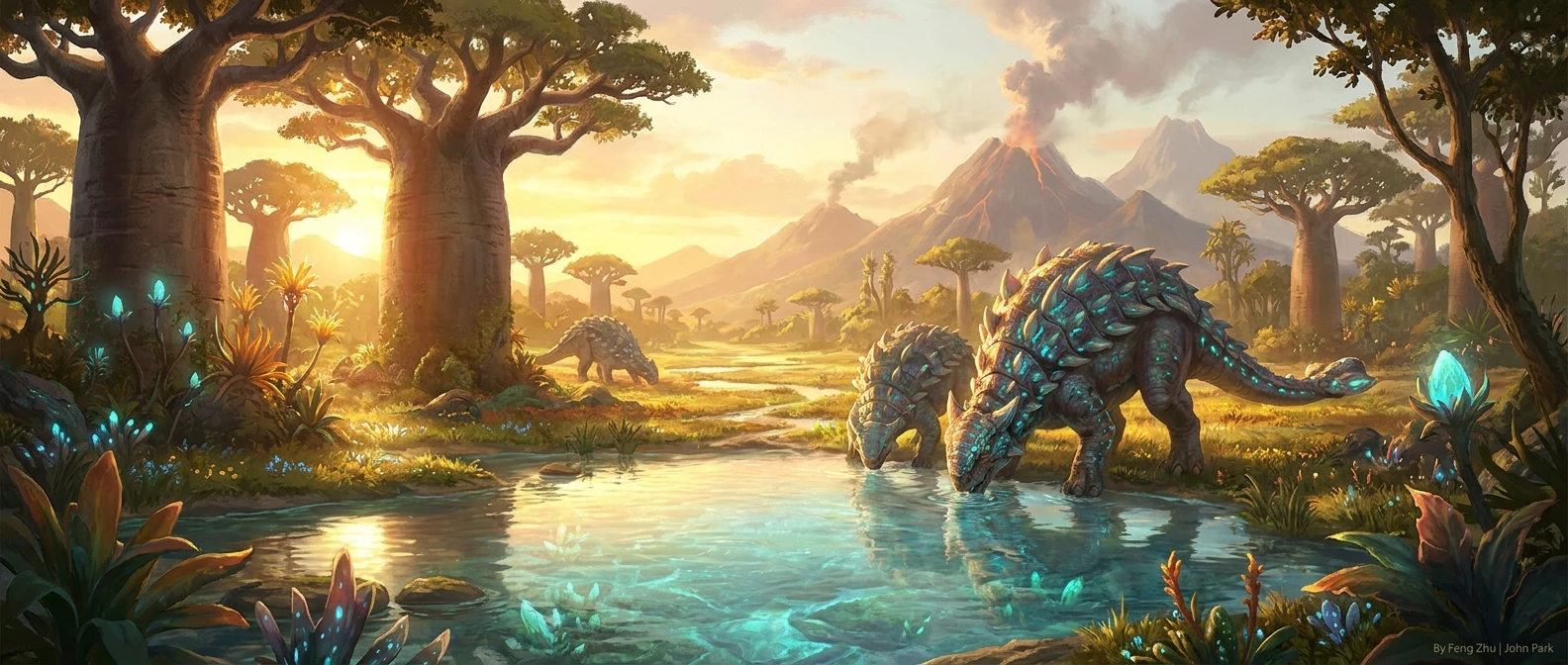
Surviving the New Ecosystem of MHWilds Monsters
Facing down MHWilds monsters for the first time completely reshapes how you approach the hunt. The dynamic ecosystems of the Forbidden Lands are ruthless, unforgiving, and constantly shifting beneath your feet. You aren’t just fighting a single beast in a vacuum anymore. You are dealing with massive roaming packs, rapidly shifting weather patterns, and apex predators that react to every little sound or movement you make. I vividly recall tracking a massive Doshaguma through the dunes, only to watch it completely alter its migration path because a violent sandstorm suddenly rolled in. That level of environmental reactivity changes the entire baseline gameplay loop. You need to adapt fast. You need to intimately understand the food chain, the localized weather cycles, and the very terrain you walk on. If you just run in blindly swinging your weapon without reading the room, you are going to get flattened by a panicked stampede of herbivores. The ecosystem is alive, and these creatures are far smarter, faster, and much more coordinated than anything the Hunter’s Guild has dealt with previously. You have to think like an apex predator yourself. The sand tides, mudslides, and thunderstorms dictate exactly where your prey moves. When lightning strikes the open plains, certain dangerous electric-type beasts emerge from hiding to charge themselves up. This comprehensive guide breaks down exactly how to navigate this living, breathing world, outsmart your prey, and come out on top every single time.
Tracking and taking down these beasts requires a completely revamped strategy. The biggest advantage you possess as a hunter is preparation. Understanding the specific threats, natural hazards, and layouts of the environment gives you a distinct edge over the local fauna. For example, using the undulating sand dunes to camouflage your approach allows you to strike a herd leader without alerting the dozens of smaller minions guarding it. Another prime example is deliberately luring a massive large carnivore into a natural quicksand pit or a collapsing rock formation, completely stripping away its mobility before you unleash your heaviest elemental combos. You have to use the terrain to your advantage because brute force alone will fail.
Read also: Power Rod Room Arc Raiders Survival Guide; Exploit Flying Type Pokemon Weakness.
| Monster Class | Primary Biome | Threat Level & Strategy |
|---|---|---|
| Fanged Beasts (e.g., Doshaguma) | Windward Plains | High. Use sonic pods to disrupt their pack formations. |
| Amphibians (e.g., Chatacabra) | Forest & Swamplands | Medium. Target the forelegs to remove their leaping advantage. |
| Flying Wyverns (e.g., Balahara) | Desert Dunes | Extreme. Stay mobile; use environmental traps when they dive. |
When you actually locate your target in the wild, you absolutely cannot just sprint into the center of the pack. You will get overwhelmed, stun-locked, and sent back to camp instantly. Here is exactly how you handle complex pack-hunting dynamics in the field:
- Scout from a secure elevated position. Use your agile Seikret mount to effortlessly reach high ground and carefully observe the patrol routes of the herd below. Identify the true alpha, which usually features distinct heavy scarring, unique coloration, or slightly larger physical proportions.
- Deploy targeted environmental distractions. Shoot a specialized slinger pod at a distant rock wall or intentionally trigger a local hazard to scatter the smaller, easily frightened monsters. Weaponized panic is your best tactical tool here.
- Separate and severely isolate the target. Once the alpha is distracted or temporarily isolated from the main pack, use a potent dung pod or a blinding flash fly to further disorient the remaining loyal followers. Force the main target into a tight corridor or narrow canyon where its numbers advantage means absolutely nothing.
Mastering these precise tactical steps ensures you maintain total control over the pace of the encounter. You dictate exactly where the fight happens, not the monsters.
Origins of the Forbidden Lands
The lore behind these untamed environments provides massive context for why the wildlife behaves so aggressively. The Forbidden Lands were cut off from standard Guild expeditions for decades due to extreme weather anomalies. The creatures trapped within these borders had to adapt to severe droughts, flash floods, and massive electrical storms. This isolation forced a rapid natural selection process. Only the most resilient and cunning beasts survived. The flora and fauna evolved symbiotically. The very landscape acts as a defense mechanism for the creatures that call it home, creating a brutal proving ground for any hunter brave enough to step foot across the border.
Evolution of Pack Dynamics
Historically, large predatory monsters were strictly solitary, fiercely defending their territory from rivals. However, the harsh conditions of the Forbidden Lands forced a massive shift in behavior. We now see huge carnivores forming temporary alliances or structured packs just to survive the harsh seasonal shifts. The Doshaguma is a perfect example of this. Alone, they are formidable, but together, they coordinate their attacks, flank their prey, and protect their wounded. This evolutionary leap means hunters can no longer rely on standard isolation tactics out of the box. The prey has learned to fight back as a unified front, making every expedition a high-stakes tactical operation.
Modern State of Hunting Tactics
Because the wildlife has adapted, the hunters had to evolve their methods as well. The Guild introduced the Seikret mounts, allowing for high-speed pursuit and seamless gear switching on the fly. You are no longer locked into a single loadout for a forty-minute expedition. If a pack of armored beasts shows up unexpectedly, you swap to a blunt weapon right from your mount’s saddle bags. This modern flexibility is a direct response to the unpredictability of the wild. You must stay fluid, constantly assessing the battlefield, changing tactics, and leveraging new mechanics to pinpoint fresh wounds on heavily armored targets.
Meteorological Impacts on Monster Behavior
The weather system in this ecosystem is not just a cosmetic background; it is a complex meteorological simulation that drives the entire food chain. The ecosystem shifts between distinct phases: the harsh Fallow period, the dangerous Inclemency, and the vibrant Plenty. During Inclemency—massive weather events like sandstorms or thunderstorms—the barometric pressure drops, triggering extreme aggression in apex predators. Some species use the chaotic winds to mask their approach, while others, primarily thunder-element beasts, actively seek out lightning strikes to charge their internal bio-electric organs. You have to monitor the environmental indicators constantly. If you see the sky turning dark, you either prepare for a brutal fight against an enraged apex, or you find shelter until the Plenty phase restores the biome’s natural balance.
Biomechanical Design of Apex Predators
To understand how to break down these targets, you need to understand their intricate biomechanics. The monsters are designed with specific anatomical vulnerabilities that change dynamically during the fight. As a beast takes damage, its muscle tissue and armored scales physically degrade. This is where analytical precision becomes your primary tool. You bypass their standard defense values by targeting structural weak points.
Here are the core scientific facts about how these creatures function:
- Bio-luminescent Signaling: Pack leaders use chemical secretions and bio-luminescence to direct their followers. Breaking the glowing glands on a leader’s neck shatters the pack’s coordination.
- Thermoregulation: Desert-dwelling beasts rely on massive thermal vents on their backs to expel heat. Hitting these vents with ice-element attacks forces the monster into thermal shock, drastically reducing its stamina.
- Acoustic Sensitivity: Creatures accustomed to the deafening roar of sandstorms have highly sensitive inner-ear structures. Sonic pods detonate near these structures, causing massive neurological feedback loops that stun them instantly.
Knowing the anatomy is half the battle. You dismantle them piece by piece through applied knowledge.
Hunting successfully requires a strict, repeatable routine. You cannot simply wing it when a massive dragon crashes into the plains. Here is a definitive seven-step protocol for executing every major expedition efficiently.
Step 1: Scout the Weather Patterns
Before you even draw your equipment, open the map and check the meteorological forecast. You need to know if a Fallow period is ending or if Inclemency is about to hit. Adjust your elemental resistances accordingly to survive the harsh conditions.
Step 2: Establish the Base Camp
Pop-up camps are essential. Find a secure location shielded from environmental hazards and drop your camp. This gives you a fast-travel point and a safe zone to restock supplies when things inevitably go sideways during a massive turf war.
Step 3: Utilize the Seikret Mount
Do not run on foot across the massive dunes. Use your Seikret to cover ground quickly. Your mount allows you to sharpen your blade, consume stamina items, and track footprints while moving at top speed. It is your absolute best tactical asset for traversal.
Step 4: Isolate the Alpha
When you locate the herd, use your specialized slinger ammo. Fire a noisemaker into the brush to draw away the smaller beasts. You want a clear one-on-one fight with the alpha without getting repeatedly stunned by minor annoying enemies.
Step 5: Engage with Focus Mode
Once the fight starts, activate Focus Mode immediately. This allows you to block incoming attacks with incredible precision and highlights the fresh wounds on the beast. Aim your heavy strikes directly at these glowing red weak points for massive stagger damage.
Step 6: Exploit Elemental Weaknesses
If the monster is covered in thick mud, use water pods to wash off its armor. If it is drawing in electricity from the sky, target the charged appendages to trigger a kinetic overload. You have two weapons on your mount; swap to the one that directly counters the current phase of the monster.
Step 7: Harvest and Extract
Once the beast is down, carve your materials quickly. The intense smell of blood easily attracts other wandering predators. Grab the scales and bones you need, hop back on your Seikret, and extract to the nearest safe camp before a larger threat crashes the party.
Let us clear up some massive misconceptions about how things work out in the Forbidden Lands. Myth: The weather is just a neat visual effect to make the game look pretty. Reality: Weather drastically alters monster behavior. Thunderstorms spawn entirely different apex predators and completely change the attack patterns of the existing ones. Myth: You have to fight every single monster in a pack simultaneously. Reality: You can completely bypass the pack. Using stealth, environmental traps, and targeted slinger ammo, you can split the herd and fight the leader completely alone. Myth: Focus mode is just an easy button for beginners. Reality: Focus mode is a highly technical mechanic required for endgame hunts. It provides precise guarding capabilities and is absolutely mandatory for breaking specific high-tier monster parts. Myth: You are permanently locked into one piece of gear for the entire hunt. Reality: Your Seikret carries a secondary gear slot. You can swap seamlessly from a ranged bow to a heavy melee setup without ever returning to your tent.
Can you capture all monsters?
No. Elder Dragons and certain massive endgame apex beasts are completely immune to standard shock and pitfall traps and must be slain.
Do monsters fight each other?
Yes. Turf wars are incredibly brutal natural occurrences and often involve multiple massive predators tearing each other apart for territory.
How does Focus Mode work?
It slightly changes your camera perspective, allowing for precise directional targeting and clearly highlighting specific structural wounds on the monster’s body.
Are Elder Dragons in the game?
Absolutely. They command the most extreme weather events and serve as the ultimate endgame challenges for experienced hunters.
What is the best starting weapon?
The Sword and Shield offers the most fluid mobility and allows you to use healing items without going through a long sheathing animation.
Can you play entirely solo?
Yes. The game provides competent NPC support hunters if you prefer not to matchmake with other live players online.
How do seasons affect the map?
Seasons dictate the availability of specific flora, endemic life, and which exact monster species are actively roaming the biome at any given time.
Surviving the wild is about mastering the environment just as much as your gear. The ecosystems are ruthless, but with the right preparation and knowledge, you can conquer any beast the Forbidden Lands throw at you. Grab your gear, mount up, and start your next great hunt today!
Leave a Reply