

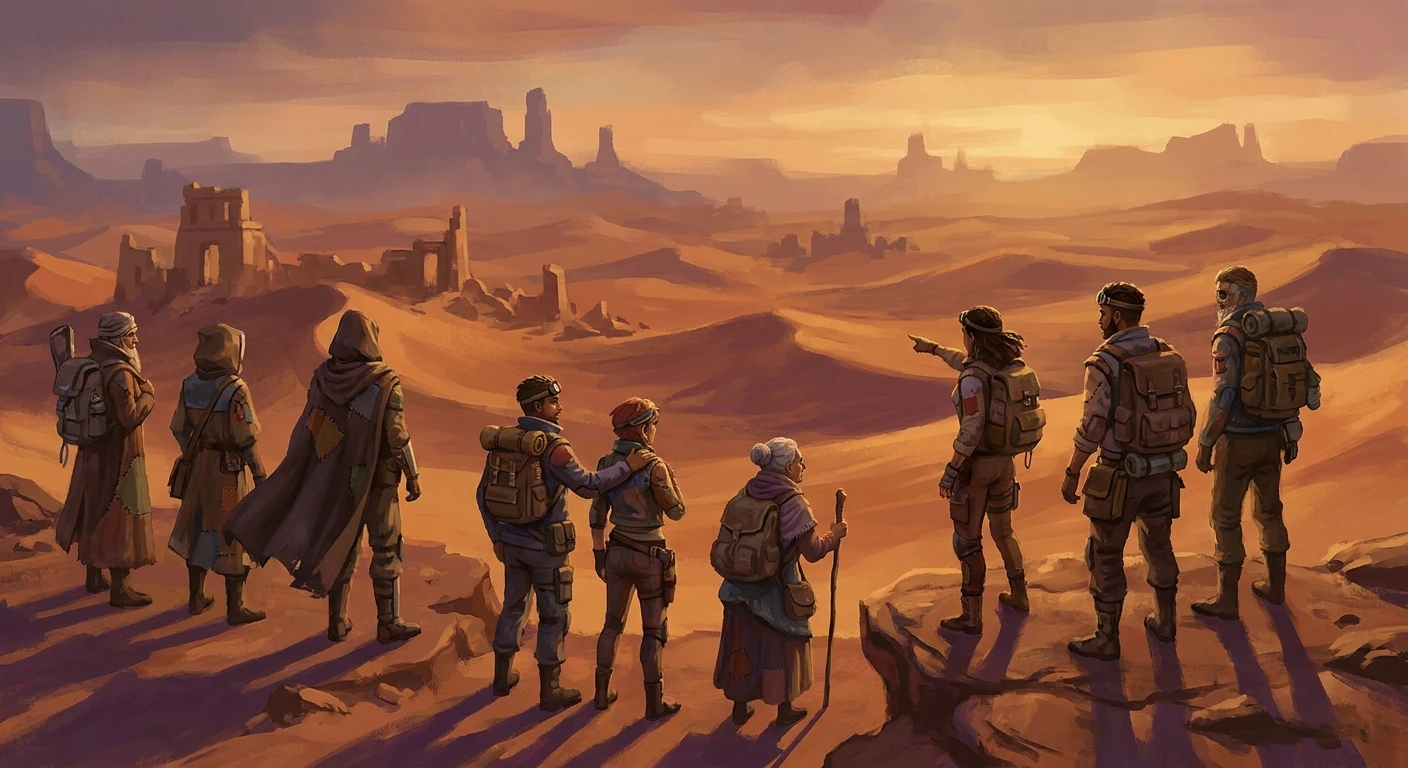
Why FNV Companions Completely Rewire Your Mojave Experience
Assembling the perfect roster of FNV Companions completely rewires how you experience the dusty, unforgiving trails of the Mojave Wasteland. If you think these characters are just glorified pack mules meant to carry your extra scrap metal and sunset sarsaparilla, you are missing out on the absolute core of the game’s narrative brilliance. The sidekicks in this legendary role-playing game provide far more than just extra firepower; they act as living, breathing lenses through which you view the complex political landscape of the setting. Every time you wander the desert with a trusted ally by your side, you are actively reshaping your strategic capabilities, unlocking unique dialogue options, and triggering dynamic loyalty quests that rank among the best writing in the entire medium.
You see, surviving the post-apocalyptic desert is rarely a solo endeavor. Whether you are navigating the treacherous politics of the New California Republic, dodging Caesar’s Legion hit squads, or trying to strike it rich on the Strip, having the right backup dictates your success. FNV Companions bring highly specific mechanical benefits, often referred to as companion perks, which dynamically alter your character build. A sniper benefits immensely from a spotter, while a melee brawler might need a cynical ghoul mechanic to keep their gear in top shape. Beyond the numbers, these characters judge your actions, comment on your faction choices, and ultimately force you to consider the moral weight of your decisions. They elevate the journey from a simple survival simulator into a profound story of camaraderie and consequence.
Read also: Golf Story Guide: Master The Ultimate Sports RPG; Best AS VAL Warzone Loadout Setup.
The Tangible Benefits of Building Your Wasteland Squad
Understanding the sheer value proposition of your traveling partners requires looking at both the combat advantages and the deep narrative hooks they provide. When you recruit a follower, you instantly gain a powerful unique perk that remains active as long as they are in your party. For instance, traveling with Craig Boone, a former NCR sharpshooter, grants you the Spotter perk, which highlights hostile targets with a glowing red aura whenever you aim down sights. This fundamentally changes how you approach night engagements and long-distance firefights. Alternatively, traveling with Rose of Sharon Cassidy grants the Whiskey Rose perk, allowing you to consume whiskey to gain damage threshold bonuses without suffering the usual intelligence penalties. These are not minor buffs; they are build-defining mechanics that reward you for exploring the world and building relationships.
To truly grasp the strategic diversity available, you have to look at how different companions complement different playstyles. You can mix and match one humanoid follower with one non-humanoid follower, creating a devastating trio that can handle almost any threat the wasteland throws at you. Below is a breakdown of some of the most impactful allies you can recruit, highlighting exactly what they bring to the table.
| Companion Name | Unique Perk Provided | Ideal Player Build Match |
|---|---|---|
| Craig Boone | Spotter (Highlights enemies while aiming) | Long-range sniper / Stealth builds |
| Arcade Gannon | Better Healing (Increases healing from all sources) | Tank builds / Survivalist setups |
| ED-E (Eyebot) | Enhanced Sensors (Detects enemies at massive range) | Exploration-focused / V.A.T.S. specialists |
| Raul Tejada | Regular Maintenance (Slows equipment degradation) | Heavy weapons / High-maintenance gear users |
Beyond the specific perks listed above, securing a loyal follower provides a multitude of secondary benefits that will make your life significantly easier as you trek toward the Vegas Strip. If you are still on the fence about whether to travel alone or in a group, consider these three massive advantages:
- Massive Inventory Expansion: The wasteland is filled with valuable loot, heavy armor, and unique weapons. Having an ally effectively doubles your carrying capacity, allowing you to haul more gear back to merchants and maximize your economic gains without constantly dropping valuable items.
- Decoy and Aggro Management: When ambushed by high-level threats like Deathclaws or Cazadores, your partner can draw enemy fire. This crucial window of distraction allows you to reposition, heal, or set up devastating explosive traps.
- Unlocking Hidden Lore and Quests: Every character has a rich backstory tied to a hidden tracker of affinity variables. By taking them to specific locations and performing actions they approve of, you trigger their personal loyalty quests. These quests offer some of the most emotionally resonant storytelling in the game and often result in powerful permanent upgrades for your partner.
Origins of Obsidian’s Companion Design
To appreciate the intricate mechanics of your wasteland friends, we have to look back at the origins of the developer’s design philosophy. The roots of these complex party dynamics stretch all the way back to the classic isometric role-playing games of the late 1990s. In the early days, followers like Ian or Tycho were relatively basic AI entities that functioned primarily as extra guns. They were notorious for blocking doorways, accidentally shooting the player character in the back with burst-fire weapons, and lacking significant conversational depth outside of their initial recruitment dialogue. However, they planted the seed for what would become a hallmark of deep RPG storytelling: the idea that the player should not have to face the end of the world completely alone.
Evolution of the Mojave Sidekicks
When the franchise transitioned into a fully 3D first-person perspective, the underlying technology allowed for a massive evolution in how sidekicks were integrated into the world. The developers realized that simply having a floating gun following the player was no longer sufficient. They introduced a complex scripting system that allowed characters to react dynamically to the player’s reputation. If you side with a faction that your follower despises, they will not just silently accept it; they will confront you, argue with you, and potentially abandon you entirely if you cross their moral threshold. This evolution transformed followers from disposable assets into autonomous individuals with their own agendas, biases, and breaking points. The introduction of the Companion Wheel interface also streamlined the clunky dialogue-based command systems of previous titles, allowing players to instantly dictate tactics, aggression levels, and spacing with a quick flick of the analog stick or mouse.
The Modern State of RPG Party Dynamics
Even years after its initial release, the system pioneered in this specific title remains a gold standard for the modern state of RPG party dynamics. Very few contemporary games have managed to replicate the delicate balance of mechanical utility and narrative weight found here. Modern titles often rely on superficial relationship meters or highly scripted romance options that feel disconnected from the actual gameplay loop. In contrast, the followers in this title are deeply woven into the geopolitical fabric of the game world. Their personal tragedies and triumphs directly mirror the broader conflicts of the setting, ensuring that your interactions with them always feel relevant to the overarching plot. They remain the benchmark by which many genre enthusiasts judge modern digital companions.
Understanding the Companion Command Wheel
From a technical perspective, managing your allies relies heavily on a brilliant piece of user interface design known as the Companion Wheel. This radical departure from traditional dialogue-tree commands allowed players to issue instantaneous tactical orders during the heat of battle. Under the hood, this wheel acts as a direct interface with the Gamebryo engine’s AI state machine. When you click the ‘Keep Distance’ or ‘Stay Close’ segments, you are actively modifying the follower’s follow-distance variables in real-time. Selecting the ‘Aggressive’ or ‘Passive’ stance immediately overwrites their combat target acquisition scripts. This intuitive design bridged the gap between complex tactical management and seamless first-person gameplay, ensuring that players never felt bogged down in menus when a squad of raiders suddenly appeared on the horizon.
AI Scripting and Pathfinding Logic
The technical architecture dictating how your partners navigate the complex terrain of the Mojave relies on intricate NavMesh adherence and dynamic sandbox AI packages. The world space is painted with an invisible layer of geometry called a Navigation Mesh, which tells the AI exactly where they can walk, run, and take cover. When you move through the environment, your follower’s pathfinding script continuously calculates the most efficient route to maintain their designated distance from you. If they fall too far behind due to complex terrain, the engine employs a rubber-banding script that discreetly teleports them to your location once you pass out of a certain radius or transition through a loading screen. To fully understand the technical wizardry keeping your squad functioning, consider these underlying mechanics:
- NavMesh Calculations: The AI constantly scans the invisible ground polygons to avoid walking into walls, falling off cliffs, or stepping into obvious hazard zones.
- Combat Distance Thresholds: Depending on the weapon equipped (melee vs. ranged), the AI dynamically adjusts its engagement radius. Melee characters will aggressively close the gap, while snipers will seek line-of-sight vantage points.
- Reputation Trigger Scripts: A background script constantly monitors your faction alignments. If your reputation with a specific group falls below a certain integer, it triggers an overriding dialogue event, pausing standard AI packages until the confrontation is resolved.
- Sandbox Idle Markers: When you tell an ally to wait at a location, their AI package switches to a ‘sandbox’ mode, allowing them to interact with nearby objects like chairs, radios, or crafting benches, making them feel organically integrated into the environment.
7-Step Plan to Maximizing Your Wasteland Squad
Step 1: Secure an Early Bodyguard in Novac
Your first major goal should be securing reliable human backup as quickly as possible. When you reach the town of Novac, wait until nightfall and speak to the sniper in the dinosaur statue. By carefully investigating the town and gathering evidence regarding a tragic local betrayal, you can complete the ‘One for My Baby’ quest. Doing this correctly not only provides immense emotional closure for the character but also immediately unlocks one of the most devastatingly effective ranged combatants in the entire game. This early acquisition will make the journey toward the Strip significantly less lethal.
Step 2: Acquire a Non-Human Ally
Remember that you can have one human and one non-human partner simultaneously. Head to the Mojave Express office in Primm to find a broken down Eyebot sitting on a counter. You will need a moderate Repair skill, a high Science skill, or specific spare parts (scrap metal, sensor modules, and scrap electronics) to fix it. Reviving this floating robot grants you an incredible sensory advantage, allowing you to detect enemies on your compass from vastly greater distances. This dual-companion setup creates a highly effective early-game triad.
Step 3: Trigger the First Loyalty Quest
Once your squad is assembled, you need to start unlocking their deeper potential. Every follower has a hidden counter that tracks specific triggers in the world. For the sniper from Novac, you need to take him to locations heavily associated with the Legion and actively disrupt their operations. Rescuing hostages, eliminating high-ranking officers, and exploring specific camps will eventually prompt him to open up about his past, initiating a profound personal quest that explores themes of trauma and redemption.
Step 4: Manage Faction Reputation Carefully
You must constantly monitor your political standing. If you are traveling with an idealistic Brotherhood of Steel scribe, do not expect her to remain silent if you actively sabotage her chapter. Similarly, if you start cozying up to ruthless dictators, your more morally upright friends will voice their disgust and eventually leave. Plan your faction alliances around the companions you wish to keep, or be prepared to dismiss them before undertaking missions that conflict with their personal ideologies.
Step 5: Upgrade Their Gear Tactically
While allies come with default magical weapons that never run out of standard ammunition, you can drastically increase their combat effectiveness by supplying them with superior gear. They will automatically equip the best weapon and armor in their inventory, provided they meet the strength requirements and you supply the necessary specialized ammunition. Give your shotgun enthusiast an upgraded riot shotgun and a steady supply of magnum buckshot, and watch them clear rooms with terrifying efficiency.
Step 6: Master the Command Wheel Interface
Do not just leave your squad on their default settings. When entering a cramped vault filled with traps, use the Command Wheel to set them to ‘Keep Distance’ and ‘Passive’ to prevent them from blindly rushing forward and triggering explosives. When fighting heavily armored opponents in the open desert, switch them to ‘Aggressive’ and command them to use their ranged weapons. Micro-managing their behavior through the wheel is the key to surviving the game’s toughest encounters on higher difficulties.
Step 7: Complete the Final Character Arc
The ultimate goal of traveling with these characters is seeing their personal stories through to the end. Completing a loyalty quest usually offers a branching choice that fundamentally alters the character’s worldview and grants them a new, permanent passive ability. Whether you convince a cynical mechanic to embrace his gunslinging past or help a doctor come to terms with his enclave heritage, these final resolutions heavily impact the ending slides of the game, cementing your legacy in the Mojave.
Debunking Common Wasteland Myths
Myth: Your friends can permanently die in regular gameplay.
Reality: Unless you are playing on the specialized Hardcore Mode, your followers will simply be knocked unconscious when their health reaches zero. They will automatically revive once all nearby hostiles are defeated, meaning you do not have to constantly reload your saves if they take a bad hit from a super mutant.
Myth: Traveling with a squad steals your valuable experience points.
Reality: You receive full experience points for any enemy killed by your allies. You do not need to land the finishing blow, or even damage the enemy at all, to reap the rewards of their combat prowess. Let them do the heavy lifting while you level up comfortably.
Myth: You can recruit an unlimited army of followers.
Reality: Without the use of external third-party modifications, the vanilla game strictly limits you to one humanoid and one non-humanoid follower at any given time. Attempting to recruit a third will simply result in a dialogue prompt forcing you to dismiss a current ally.
Frequently Asked Questions
Can I romance any of the FNV Companions?
No, the game intentionally avoids traditional romance mechanics. The developers focused entirely on platonic camaraderie, deep psychological exploration, and mutual survival rather than dating simulation elements.
Where do they go when I dismiss them?
By default, they will slowly walk back to their original recruitment location. However, once you unlock the Presidential Suite in the Lucky 38 casino, you gain the option to send all dismissed allies there, creating a convenient centralized hub for your squad.
Will they wear faction disguise armor?
Generally, no. Most followers will refuse to wear armor clearly branded by major factions like the NCR or Legion to prevent severe logic bugs with the game’s disguise system. Stick to neutral combat armor for upgrades.
Do their default weapons break?
No, the signature weapons they spawn with have infinite condition and infinite standard ammunition. However, if you give them a new weapon from your inventory, it will degrade normally and require you to supply specific ammo.
Can they carry stolen items?
Yes, your followers have no moral qualms about acting as a fence for your stolen goods. You can safely transfer items marked with red text into their inventory without consequence.
What happens if I accidentally shoot them?
Accidental friendly fire is usually tolerated for a few hits. However, if you deal massive sustained damage to your own partner, they will turn permanently hostile, forcing you to kill them and failing all their associated quests.
Do I need high charisma to recruit them?
No, the Charisma stat does not limit your ability to recruit anyone. However, a higher Charisma stat does passively increase the damage output and armor rating of your followers through the ‘Nerve’ mechanic.
In conclusion, mastering the intricacies of FNV Companions is absolutely essential for anyone looking to fully experience the narrative depth and strategic variety of this legendary title. They are the emotional anchor of the Mojave, turning a lonely desert trek into a memorable saga of shared survival. Don’t wander the wastes alone—load up your game, head to Novac or Primm, and start building your ultimate wasteland squad today!
Leave a Reply