

The Search for the GTA 6 Voice Actors
The immense anticipation surrounding the GTA 6 voice actors has fundamentally reshaped how the gaming community engages with interactive entertainment. Finding out who stands behind the microphone for the industry’s biggest protagonists has become a massive cultural phenomenon. Listen, whenever a blockbuster title approaches, the rumor mill goes into overdrive, but the conversation surrounding Lucia and Jason operates on a completely different level. Fans meticulously analyze every fragmented audio clip, every visual teaser, and every leaked piece of information just to attach a human face to these digital icons. You can feel the electricity in the gaming forums as players debate vocal inflections, compare facial bone structures, and cross-reference union databases. This relentless pursuit of the truth highlights a deeper appreciation for the incredible artistic talent required to bring a sprawling open-world narrative to life. Modern interactive storytelling demands so much more than simply reading lines from a page; it requires profound emotional intelligence, intense physical stamina, and a willingness to commit to a singular project for years. The performers who step into these monumental roles carry the weight of impossible expectations, yet they consistently deliver performances that define a generation of entertainment.
The Anatomy of a Rockstar Cast
Understanding the casting methodology for massive open-world titles requires looking past the glitz of traditional Hollywood talent acquisition. The studio behind this highly anticipated release has mastered the art of elevating relatively unknown character actors into household names practically overnight. Instead of relying on established A-list celebrities who might bring their own distracting public personas into the game, the casting directors search for raw, malleable talent capable of disappearing completely into the gritty reality of the fictional universe. This strategy ensures that when players interact with the protagonists, they see the authentic character, not a famous actor merely playing dress-up. The process of securing the right GTA 6 voice actors involves navigating an incredibly secretive and demanding labyrinth of auditions and screen tests.
Read also: The Psychology Behind Hot Disney Characters; The Best 2022 Video Games to Play Now.
| Character Role | Suspected / Confirmed Talent | Narrative Function |
|---|---|---|
| Lucia | Manni L. Perez (Rumored) | Driven co-protagonist navigating a complex criminal underworld |
| Jason | Dylan Rourke (Rumored) | Loyal partner and co-protagonist in the central storyline |
| Stefanie | Unverified Performer | Key supporting figure seen in early promotional material |
Securing a spot on this exclusive roster is notoriously grueling. The casting pipeline involves several rigorous stages that test a performer’s absolute limits.
- Comprehensive Audition Screening: Performers submit blind tapes without knowing the actual project name, often reading dummy scripts under vague codenames to prevent story leaks.
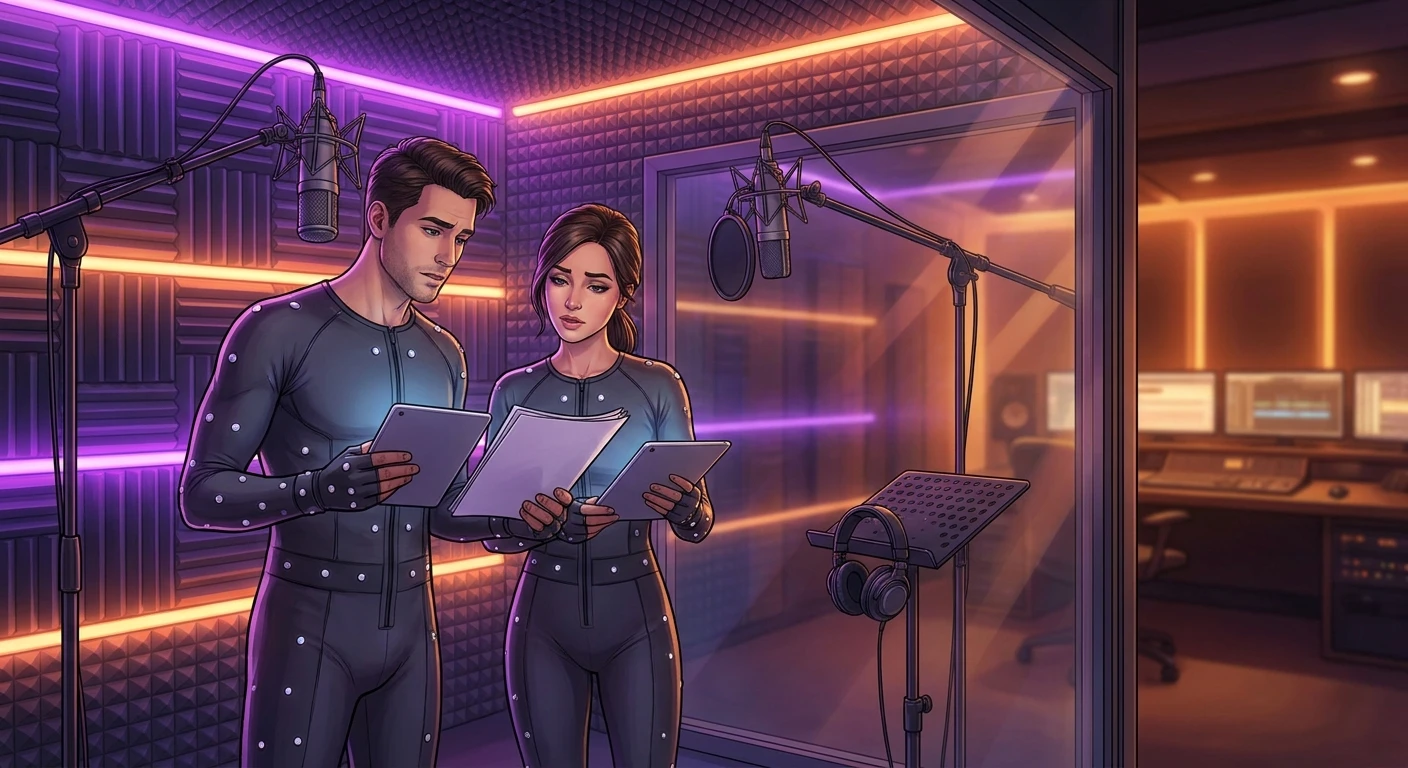
- Extensive Motion Capture Testing: Actors must demonstrate profound physical coordination, as they wear restrictive suits fitted with optical tracking nodes while acting out complex, physically demanding action scenes.
- Multi-Year Contractual Commitments: Securing a major role demands signing airtight non-disclosure agreements and dedicating three to five years to a rigorous, highly confidential production schedule.
History & Origins
Origins of Rockstar Performance Capture
Tracing the lineage of interactive voice acting reveals a fascinating technological and artistic progression. In the early days of 3D gaming, developers routinely recorded dialogue in isolated, static sound booths. Actors simply stood in front of a microphone, reading lines with minimal physical context. During the era of Grand Theft Auto III and Vice City, the focus remained heavily on securing recognizable celebrity voices to grant the medium mainstream legitimacy. However, as graphical fidelity improved, the disconnect between high-profile voices and stiff digital avatars became glaringly obvious. The studio recognized that true immersion required a holistic approach, leading to the early experiments with physical performance capture that fundamentally altered their development pipeline.
The Evolution of Grand Theft Auto Casting
The philosophical shift became undeniable during the production of Grand Theft Auto IV. The developers actively pivoted away from expensive celebrity cameos, realizing that famous voices frequently shattered the illusion of the game’s meticulously crafted universe. They began scouting theater veterans, television character actors, and stage performers who possessed both vocal power and physical theatricality. By prioritizing genuine acting ability over marquee name recognition, the narratives gained an unprecedented level of grit and authenticity. This approach solidified a new industry standard: the character must always remain bigger than the actor playing them. The massive critical success of this strategy guaranteed it would become the blueprint for all future endeavors.
The Modern State of Video Game Voice Acting
Today, the term “voice acting” feels almost inadequate for the monumental tasks these performers undertake. The modern era demands full-body performance capture, where every subtle shift in posture, every micro-expression, and every hesitation is translated directly into the digital world. The individuals chosen as the GTA 6 voice actors are not merely providing a vocal track; they are giving physical birth to their digital counterparts. This modern state of performance requires a unique hybrid of stage acting, stunt work, and voice-over skills. The performers essentially act in a massive, empty warehouse equipped with scaffolding, relying entirely on their imagination to visualize the vibrant, chaotic world surrounding them.
Scientific and Technical Deep Dive
Facial Rigging and Micro-Expressions
The sheer technical wizardry capturing these performances is genuinely mind-boggling. Achieving the level of photorealism expected from modern interactive media requires capturing the most minuscule human reactions. Performers wear specialized, lightweight head-mounted camera rigs that focus directly on their faces. These cameras record precise muscle twitches, subtle pupil dilation, and involuntary micro-expressions that convey emotion far better than words ever could. The proprietary facial rigging software then maps these organic human nuances onto a high-density digital mesh. This ensures that when a character experiences betrayal, fear, or joy, the player sees a genuine human reaction rather than a pre-animated, robotic sequence.
Spatial Audio and Dynamic Dialogue Systems
Beyond the visual capture, the audio engineering pushing these performances forward relies on incredibly sophisticated spatial and procedural systems. The recorded dialogue is not merely played back like a standard MP3 file; it is dynamically manipulated by the game engine in real-time. The technology accounts for environmental acoustics, physical distance between characters, and even the immediate physiological state of the protagonist. This seamless integration of raw performance and algorithmic processing creates a shockingly believable auditory landscape.
- High-fidelity helmet cameras record subtle eye darting and involuntary cheek twitches during intensely emotional line deliveries.
- Infrared tracking markers strategically placed across the performer’s body translate raw human mechanics into digital skeletons without noticeable frame drops.
- Advanced procedural audio software dynamically alters a character’s vocal strain based on their in-game stamina depletion and immediate physical exertion.
- Intricate branching dialogue trees require actors to record dozens of unique vocal variations for a single conversation, adapting instantly to minute shifts in player behavior.
A 7-Step Guide to Identifying Video Game Voice Talent
Step 1: Analyzing the Initial Trailers
The investigation always begins with the official promotional material. Dedicated fans perform meticulous frame-by-frame breakdowns, isolating every spoken word to study the distinct vocal frequencies. By running these short audio snippets through spectral analysis tools, researchers create a unique vocal fingerprint to compare against known talent databases.
Step 2: Cross-Referencing SAG-AFTRA Databases
Internet sleuths frequently scour union registries for interactive media contracts matching the known production timelines. They search for specific developer codenames or unannounced projects that require long-term acting commitments, hoping to spot a recognizable name attached to a heavily guarded production schedule.
Step 3: Monitoring Social Media Followings
A surprisingly effective tactic involves tracking the digital footprint of the game’s lead development staff. When multiple senior writers, audio directors, and animation leads simultaneously begin following a specific, relatively unknown actor on platforms like Instagram, it strongly indicates the formation of a new professional relationship.
Step 4: Comparing Facial Structures and Resemblance
Since modern interactive entertainment utilizes full physical performance capture, the digital protagonists frequently share distinct facial characteristics with their real-world counterparts. Fans generate detailed side-by-side visual comparisons, mapping jawlines, cheekbones, and eye shapes to confirm an actor’s involvement.
Step 5: Evaluating Vocal Timbre and Cadence
Investigators gather hundreds of hours of television appearances, podcast interviews, and commercial voice-overs from suspected performers. They meticulously match the precise resonance, regional accents, and natural breathing patterns against the trailer’s dialogue to confirm a definitive auditory match.
Step 6: Tracking Actor Resumes and Portfolio Updates
Performers occasionally update their online resumes or casting profiles with incredibly vague credits, such as “Lead in Major Upcoming Video Game,” or they might list specific motion capture directors they recently worked with. These tiny portfolio updates often inadvertently confirm their participation to eagle-eyed fans.
Step 7: Waiting for Official Studio Announcements
Despite the incredibly thorough and often accurate community research, absolute confirmation remains elusive until the publisher decides to speak. The definitive truth only arrives when the studio formally unveils the cast list during the final marketing push or when players finally see the names rolling in the end credits.
Myths & Reality
Myth: Major game studios utilize artificial intelligence to generate the voices of their main protagonists.
Reality: Industry-leading developers rely exclusively on authentic human performance capture to guarantee genuine emotional depth and subtle interpersonal chemistry between characters.
Myth: A-list Hollywood celebrities dominate the primary cast lists of modern open-world crime games.
Reality: The developer deliberately casts incredibly talented but lesser-known character actors to prevent real-world fame from overshadowing the digital persona’s identity.
Myth: Voice recording for a massive open-world video game only requires a few short weeks in a studio booth.
Reality: Executing full performance capture for major interactive titles demands several years of continuous physical acting, script revisions, and rigorous availability.
Myth: The game’s script is entirely finalized before the performers ever step foot into the recording studio.
Reality: Performers frequently improvise their lines on the motion capture stage, and intricate scenes continually evolve throughout the extended production timeline based on natural actor chemistry.
FAQ & Conclusion
Who plays Lucia in the new game?
While massive community speculation and visual comparisons strongly point toward Manni L. Perez, official studio confirmation regarding Lucia’s performer remains tightly guarded.
Who provides the voice for Jason?
Similar to Lucia, the character of Jason has been heavily linked by investigative fans to actor Dylan Rourke, though these claims await formal validation.
Do the performers also do their own motion capture?
Yes, modern protagonists require full performance capture, meaning the voice actors also provide the physical movements, stunts, and facial expressions for their characters.
Why does the developer use relatively unknown talent?
Casting lesser-known actors ensures players fully immerse themselves in the game world without being distracted by a famous celebrity’s real-world persona.
How long does the recording process take?
Major open-world projects typically require the core cast to participate in intensive motion capture and voice recording sessions spanning three to five years.
Is AI used to replace human actors?
No, the emotional complexity and nuanced storytelling required for these massive narratives demand genuine human performances that artificial intelligence cannot replicate.
Will previous game protagonists make cameo appearances?
While easter eggs are common, the studio generally prefers keeping distinct numerical entries separate to let the new cast establish their own unique legacy.
When are the official credits published?
Full cast lists and comprehensive credits are traditionally withheld until the game’s official global launch to prevent story spoilers and maintain absolute secrecy.
The journey to discover the identities of the GTA 6 voice actors is a testament to the community’s profound passion for interactive storytelling. These talented performers pour years of their lives into crafting characters that will ultimately become digital legends. Whether you are actively analyzing the latest rumors or simply waiting to experience the epic narrative firsthand, the dedication of the cast guarantees an unforgettable experience. If you found this breakdown of the casting process helpful, share this guide with your fellow gamers and leave a comment below with your own casting theories!
Leave a Reply