

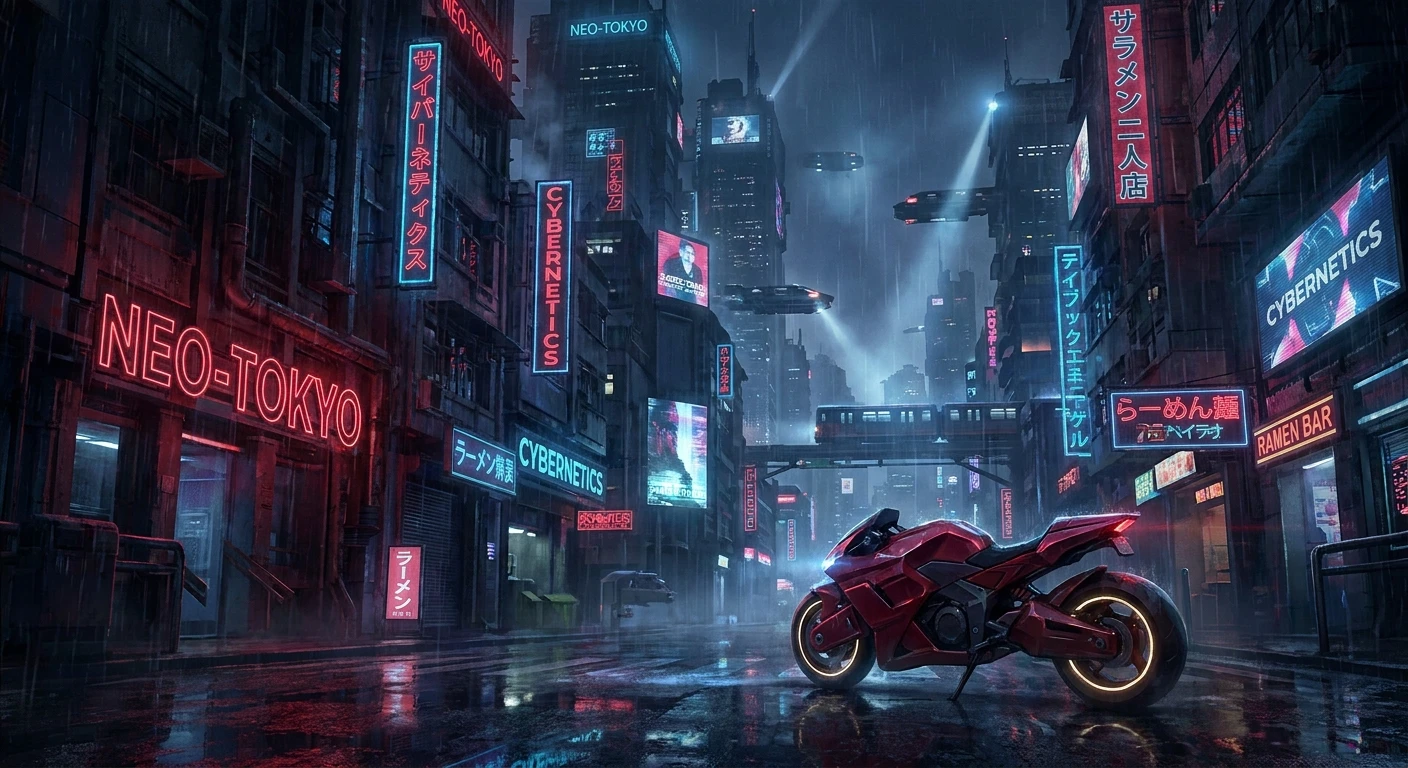
The Akira Project: Bridging the Gap Between Anime and Live-Action
You have likely seen the iconic motorcycle slide replicated across countless media properties, but the Akira Project took that devotion to an entirely new level. When passionate fans grew tired of waiting for a Hollywood studio to properly adapt Katsuhiro Otomo’s cyberpunk masterpiece, a dedicated group of independent creators took matters into their own hands. Launched to the public after years of meticulous planning, the Akira Project stands as a towering achievement in grassroots filmmaking. The core thesis of this endeavor is simple: authenticity and respect for source material will always triumph over massive studio budgets that lack a genuine understanding of the original artistic vision. By utilizing crowd-sourced funding, a global cast, and a hybrid of practical and digital effects, the team proved that a gritty, realistic Neo-Tokyo could exist on screen without sacrificing the soul of the 1988 animated classic. Look at the landscape of adaptations today; the conversation always circles back to how independent creators capture the magic that giant corporations routinely miss. The Akira Project remains a benchmark for independent cinema, setting a standard that aspiring filmmakers still study years after its initial viral release.
Defining the True Value of Grassroots Filmmaking
Understanding the impact of the Akira Project requires looking at the broader context of live-action anime adaptations. For decades, the industry struggled to translate the kinetic energy of Japanese animation into live-action formats. The fan-led initiative bypassed the traditional studio red tape, offering a direct-to-consumer cinematic experience that delivered exactly what the audience craved. The primary benefit of this approach is creative freedom. Without executives demanding script changes to appeal to broader demographics, the creators maintained the violent, dystopian, and complex themes inherent to the property. Consider two specific examples of this value proposition: first, the casting process prioritized actors who actually resembled the original characters rather than relying on bankable A-list celebrities; second, the costume design utilized real leather and tailored fabrics that looked battle-worn, rather than polished superhero outfits. This grounded approach made the sci-fi elements feel remarkably tangible.
Read also: Golf Story Guide: Master The Ultimate Sports RPG; Meet the GTA 6 Voice Actors: Cast, Rumors, and Updates.
| Feature | The Akira Project (Fan Initiative) | Traditional Hollywood Concepts |
|---|---|---|
| Budget Scope | Micro-budget (Crowdfunded, under $50k) | Hundreds of millions (Studio-backed) |
| Creative Control | Completely autonomous, led by core fans | Heavily monitored by corporate boards |
| Visual Accuracy | Strict adherence to manga and anime aesthetics | Often diluted for mainstream western appeal |
| Casting Strategy | Demographically accurate, character-focused | Star-driven, leading to frequent controversies |
The success of this endeavor was built on several foundational pillars that aspiring filmmakers continuously reference. These methodologies outline exactly how a small team can produce blockbuster-quality visuals:
- Strategic Crowdfunding: The team leveraged Indiegogo not just for capital, but to build an engaged community that felt ownership over the final product.
- Hybrid Production Techniques: Instead of relying solely on green screens, the crew shot in real-world locations in Montreal to anchor the digital extensions.
- Global Collaboration: Post-production duties were distributed across a network of digital artists worldwide, functioning as a decentralized visual effects studio.
Origins of the Fan Initiative
The concept for the Akira Project was born out of collective frustration. In 2012, director Nguyen-Anh Nguyen launched an Indiegogo campaign after years of reading about stalled studio attempts to bring the story to life. The initial pitch was straightforward: create a live-action trailer that accurately reflected the tone of Neo-Tokyo. The response from the global community was immediate and overwhelming. Fans from dozens of countries contributed funds, proving that a massive, hungry audience existed for a faithful adaptation. This initial burst of support provided the seed money required to rent equipment, secure locations, and construct the iconic red motorcycle, which served as the physical and metaphorical centerpiece of the production.
Evolution of the Production
Filming primarily took place over a few grueling days in Montreal, utilizing the city’s unique underground architecture to simulate the claustrophobic, brutalist environments of a futuristic metropolis. Once principal photography wrapped, the true marathon began. The evolution from raw footage to the final polished trailer took roughly a year and a half. This extended post-production timeline allowed the decentralized team of visual effects artists to meticulously composite digital structures, neon lighting, and psychic energy bursts onto the live-action plates. The collaborative effort was a testament to the dedication of the fan community, with many professionals donating their free time after completing their regular studio jobs just to be part of the Akira Project.
Modern State of Live-Action Adaptations
Looking back from a modern perspective, the landscape of live-action adaptations has shifted dramatically, partly due to the high standards set by projects like this. While major studios, including Warner Bros., have continuously attempted to get an official live-action feature off the ground—most notably attaching directors like Taika Waititi—the fan-made trailer remains the most tangible, widely respected live-action representation of the franchise. It serves as a permanent proof of concept, demonstrating that the aesthetic and thematic density of the source material can translate beautifully to live-action if handled with genuine reverence rather than corporate calculation.
Technical Execution on a Crowdfunded Budget
The technical hurdles facing the Akira Project were immense. Recreating a cyberpunk dystopia requires significant visual effects infrastructure, something rarely available to independent creators. However, the team utilized prosumer and professional-grade digital cinema cameras, specifically the RED Epic, to capture high-dynamic-range footage. This raw data gave the visual effects team the latitude needed to push the color grading toward the aggressive reds, deep blues, and stark shadows characteristic of the anime. Lighting played a crucial role; practical light sources were embedded directly into the motorcycle and the surrounding set pieces to ensure that the digital reflections matched the physical environments perfectly. This marriage of practical lighting and digital augmentation is what gives the footage its premium, cinematic texture.
Visual Effects and Cyberpunk Aesthetics
Creating the sprawling cityscape of Neo-Tokyo required advanced compositing techniques. The team utilized industry-standard software to build 3D matte paintings and integrate them seamlessly with the live-action plates shot in Canada. The aesthetic engineering focused heavily on making the future look decayed. The digital artists intentionally added dirt, atmospheric haze, and anamorphic lens flares to the CGI elements so they would not look artificially clean next to the real-world actors. The resulting visuals provide a masterclass in independent VFX.
- Camera System: Shot entirely on RED Epic cameras at 5K resolution for maximum post-production flexibility.
- Compositing Software: Extensive use of Nuke and Adobe After Effects for integrating 3D elements into 2D plates.
- Practical Assets: The iconic red motorcycle was a custom-built, fully functional physical prop, not a CGI creation.
- Audio Engineering: The soundscape utilized aggressive, synthesized bass drops to mimic the psychic pressure of the original film.
Day 1: Experience the Source Material
Begin your journey by watching the original 1988 animated film. Pay close attention to the framing, the pacing of the action sequences, and the specific color palette used for Neo-Tokyo. Understanding these baseline elements is essential before you can properly evaluate any live-action interpretation.
Day 2: Read the Foundational Text
Secure a copy of Katsuhiro Otomo’s original manga. The animated film only covers a fraction of the sprawling narrative. By reading the manga, you gain a deeper appreciation for the complex political and societal themes that the Akira Project sought to capture in its brief runtime.
Day 3: Watch the Crowdfunded Trailer
View the Akira Project trailer on a high-quality display with excellent audio. Do not just watch it casually; treat it as a piece of academic filmmaking. Observe how the director chose to adapt specific, recognizable panels and frames directly from the anime into live-action photography.
Day 4: Compare Practical Effects and CGI
Rewatch the trailer, but this time, specifically look for the seams between the practical props—like the motorcycle and the wardrobe—and the digital backgrounds. Take notes on how the practical lighting on the actors helps sell the illusion of the massive CGI cityscapes behind them.
Day 5: Study the Original Soundtrack
The auditory experience is half the battle in cyberpunk media. Listen to the original Geinoh Yamashirogumi score, then compare it to the aggressive, modern sound design utilized in the fan trailer. Note how audio cues can trigger nostalgia while simultaneously modernizing the feel of the world.
Day 6: Explore the Hollywood Production Hell
Spend time researching the various failed Hollywood attempts to adapt the property. Review leaked script details, abandoned concept art, and casting rumors from the past two decades. This research will sharply contextualize exactly why the fan-made Akira Project was so necessary and celebrated.
Day 7: Engage with the Cyberpunk Community
Join online forums, subreddits, or Discord servers dedicated to cyberpunk cinema and indie filmmaking. Discuss your findings, share your analysis of the visual effects, and explore how other independent creators are currently using similar grassroots funding models to launch their own ambitious properties.
Separating Fact from Internet Fiction
Myth: The Akira Project was a full-length feature film that was hidden from the public by studio executives.
Reality: It was always designed and executed strictly as a five-minute concept trailer to prove that a live-action adaptation was visually possible.
Myth: The production had secret financial backing from major Hollywood producers.
Reality: The entire budget was raised transparently through crowdsourcing, totaling less than most studios spend on catering for a single week.
Myth: Warner Bros. issued immediate cease-and-desist orders to destroy the footage.
Reality: The project operated in a legal gray area as a non-profit fan tribute, and it remained online, widely praised by the industry without being subjected to a takedown.
Myth: The team stole 3D assets from existing video games to create the cityscapes.
Reality: The visual effects artists painstakingly built the matte paintings, 3D models, and compositing plates from scratch over a grueling eighteen-month post-production period.
What exactly is the Akira Project?
It is a highly polished, crowdfunded live-action fan trailer created to demonstrate how a faithful adaptation of the legendary cyberpunk anime could look on the big screen.
Who directed this fan initiative?
The initiative was spearheaded and directed by Nguyen-Anh Nguyen, an independent filmmaker with a deep passion for the original source material and grassroots production.
Where was the footage filmed?
Principal photography was conducted in Montreal, Quebec. The team utilized the city’s distinct underground infrastructure to mimic the brutalist architecture of Neo-Tokyo.
How was the budget raised?
Funding was secured through a highly successful Indiegogo campaign in 2012, drawing contributions from passionate fans across the globe who wanted to see the vision realized.
Did Warner Bros try to stop the release?
No. Because it was clearly labeled as a non-profit fan tribute and not monetized as a commercial feature, it avoided the traditional legal wrath of the rights holders.
Is there a full-length movie available?
No. The creators only produced the five-minute trailer. There are no secret cuts or unreleased feature-length versions of this specific independent production.
Will Taika Waititi use this footage?
No. The official Hollywood production, which has seen directors like Taika Waititi attached, is a completely separate corporate entity and shares no assets with the fan team.
How long did post-production take?
The post-production phase, heavily reliant on a decentralized team of volunteer visual effects artists, took approximately a year and a half to finalize before the 2014 release.
The Enduring Power of Independent Cinema
The Akira Project represents a watershed moment in digital filmmaking, proving that passion, community organization, and technical ingenuity can rival the output of traditional Hollywood studios. It stands as a permanent reminder that the essence of great sci-fi lies in its execution and respect for the lore, not just its budget. If you are an aspiring creator, a fan of the cyberpunk genre, or simply someone who appreciates incredible visual arts, take the time to study this monumental achievement. Watch the trailer, analyze the behind-the-scenes breakdowns, and support independent creators who continue to push the boundaries of what is possible outside the studio system.
Leave a Reply