

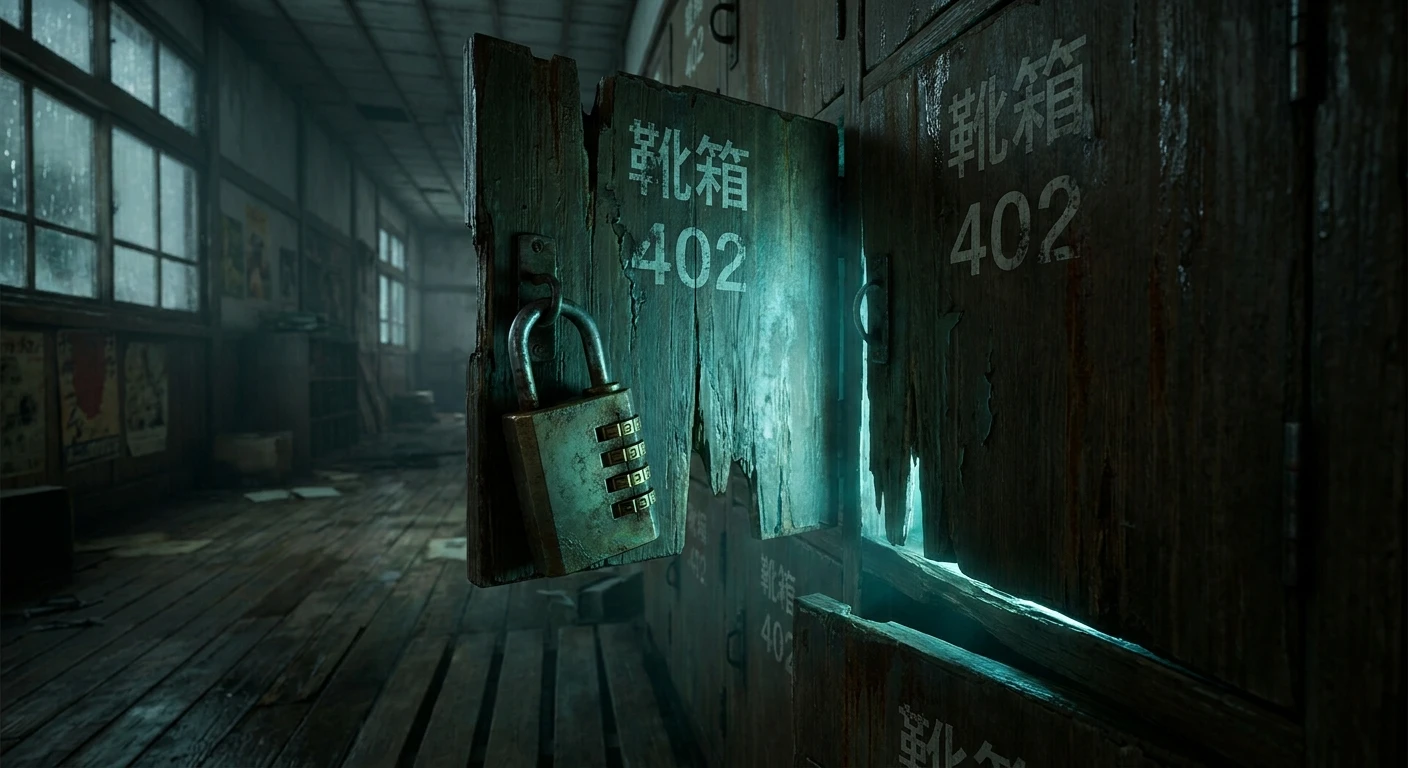
The Strategy Behind the Silent Hill f Locker Combination
You know the drill. You are creeping down a shadowy, dilapidated hallway, your resources are dangerously low, and you spot a rusted metal cabinet. Finding the exact Silent Hill f locker combination is usually the only thing standing between you and the much-needed health items, ammunition, or critical quest keys locked inside. Survival horror games thrive on testing your nerves under pressure, and combining an intricate mechanical puzzle with the looming threat of the unknown creates a beautifully tense atmosphere. Instead of just randomly spinning dials while nervously checking over your shoulder, you need a solid, reliable strategy to get that door open. This guide breaks down exactly how to approach these environmental puzzles, decode the subtle clues left behind by former residents, and secure your loot without panicking.
The 1960s Japanese setting of the game introduces unique cultural and visual motifs to these codes, making them much more than just simple numbers scribbled hastily on a bloody wall. You are dealing with a world where folklore, psychological terror, and physical mechanics blend seamlessly. When you approach a locked container, the game expects you to observe your surroundings closely. The solution is always nearby, but it is heavily obscured by the decaying, nightmarish environment. Having a clear methodology for finding and inputting the code will save you precious time and keep your character alive when the creeping horrors start closing in.
Read also: Golf Story Guide: Master The Ultimate Sports RPG; Golden Seed Guide: Maximize Your Healing Power Today.
Mastering the Mechanics of Combination Locks
How do these specific environmental locks actually function within the game engine? Most players assume you simply find a standard memo, read a four-digit number, and punch in the digits. However, the puzzle design goes far beyond simple reading comprehension. The game layers its clues heavily into the immediate environment. You might find a torn piece of aged paper, a strange arrangement of traditional Japanese dolls on a nearby shelf, or even a specific pattern of floral arrangements that dictate the correct numeric sequence. The environment itself is the primary document you must learn to read.
Understanding the relationship between the type of clue and the reward hidden inside is a massive advantage. Developers use a distinct language of risk and reward. Highly obscure clues typically guard the most valuable items, while more straightforward numeric notes often lead to basic survival supplies. By categorizing these elements, you can prioritize which puzzles are worth your time during high-stress encounters.
| Clue Source Type | Typical Environmental Location | Expected Reward Value |
|---|---|---|
| Handwritten Student Notes or Journals | Scattered across classroom desks and administrative bulletin boards | High (Critical Quest Items, Unique Weapons) |
| Cryptic Environmental Blood Stains | Smeared on walls directly opposite or adjacent to the locked door | Medium (Standard Ammunition, Basic Health Drinks) |
| Poetic Riddles or Showa-era Haikus | Hidden inside library books or left behind at traditional shrines | High (Lore Documents, Story Progression Keys) |
To successfully bypass these mechanisms without triggering unnecessary enemy encounters, follow this specific approach to puzzle resolution:
- Clear the immediate room of any active threats before you interact with the dial, ensuring you are not ambushed while locked into the puzzle interface.
- Search every single desk, drawer, and bulletin board in the vicinity for localized text documents or visual anomalies that stand out from the background decay.
- Align the combination tumblers deliberately, listening closely for the distinct mechanical click of the correct digit setting into place.
Origins of Puzzle Mechanics in Survival Horror
The Genesis of the Combination Puzzle
Combination locks have been a foundational pillar of the survival horror genre since its inception in the early 1990s. Early developers faced strict hardware limitations regarding how many enemies they could render on screen simultaneously. To maintain high tension without relying purely on combat, they introduced complex logic puzzles. Forcing a player to stop, think, and interact with a highly detailed, static interface while eerie music plays in the background creates immense psychological pressure. The early iterations were often based on simple mathematical equations or straightforward fetch quests where a document explicitly stated the required code.
The Evolution of Cryptic Clues
As gaming hardware evolved, so did the complexity of the puzzle design. Developers realized that simply handing the player a code felt too artificial. The design philosophy shifted toward diegetic elements—meaning the puzzles existed naturally within the game world. If a hospital staff member changed a locker code, they would not just write it on the wall; they would leave a cryptic hint for a colleague based on a shared memory or an esoteric piece of trivia. This evolution forced players to engage deeply with the lore, reading staff memos, examining patient charts, and piecing together the daily lives of the characters who lived there before the nightmare began.
The Modern State of Puzzle Integration
Today, the integration of these mechanics reflects a highly sophisticated approach to environmental storytelling. The puzzles are deeply tied to the specific era and cultural setting of the game. In a 1960s Japanese setting, a combination lock might require understanding subtle references to local folklore, traditional seasonal changes, or the specific layout of a Showa-era schoolhouse. The developers utilize these puzzles to immerse the player completely in the time period, ensuring that every code broken feels like a genuine triumph of observation and cultural deduction.
The Anatomy of a Digital Lock Mechanism
Algorithmic Code Generation
From a technical standpoint, the way modern survival horror games generate and verify combination codes is a fascinating study in software engineering. Early games used static, hard-coded numbers. If you knew the code from a previous playthrough, you could sprint directly to the locker and bypass the entire puzzle sequence. Modern development often employs seeded Random Number Generation (RNG). When you start a new campaign, the game engine generates a unique seed that shuffles item locations and numeric codes. This system ensures that the locker combination you receive is entirely unique to your specific save file, rendering old-school cheat sheets completely obsolete.
State Tracking and Interface Design
The puzzle interface itself is a complex state machine. When you zoom in on the dial, the game engine changes its fundamental state. It often narrows your field of view, shifts the audio mixing to emphasize mechanical clicks, and sometimes even alters the spawning logic of wandering enemies. The technical implementation must ensure the player feels vulnerable.
- Dynamic difficulty modifiers alter the complexity of the hints generated by the engine, providing clearer text on lower difficulties and highly abstract riddles on higher settings.
- Inventory state tracking ensures the locking mechanism remains fully interactive until the exact required item is successfully extracted from the compartment.
- Audio design utilizes very specific, low-frequency sound files to accurately simulate the heavy, rusted internal tumbler mechanics of vintage hardware.
- Variable randomization logic actively prevents the pure memorization of numeric sequences across distinct playthroughs, demanding active engagement every time.
A Systematic Plan for Cracking the Code
Step 1: Secure the Immediate Perimeter
Before you even look at the metal dial, you must sweep the room. Puzzles lock your camera perspective, making you incredibly vulnerable to an attack from behind. Check the corners, listen for the shuffling sounds of approaching creatures, and close any adjacent doors to create a temporary safe zone.
Step 2: Locate the Primary Source Document
Your next move is to find the anchor clue. Scour the room for any readable documents. Look for glints of light indicating an interactive object. In this setting, the document might be a crumpled student notebook, a faded newspaper clipping, or a stern warning memo from a facility supervisor.
Step 3: Identify the Cipher Pattern
Once you have the document, you need to establish the logic. Does the memo mention dates, ages, or quantities? If a poem mentions three ravens, two fading blossoms, and one rising moon, your base sequence is likely establishing a three-digit or four-digit framework based on those exact quantities.
Step 4: Cross-Reference Visual Anomalies
Sometimes the text alone is not enough. You must cross-reference the text with the environment. If the clue mentions looking through a window, physically position your character at the window and look outside. You might see numbers painted on a distant billboard or a specific number of hanging lanterns that complete your sequence.
Step 5: Input the Initial Sequence Slowly
Approach the locker and begin inputting the digits. Do this deliberately. In many modern engines, the speed at which you turn the dial can trigger audio feedback. A faint, slightly different mechanical click can sometimes indicate that a specific tumbler has hit the correct number, even if the rest of the code is wrong.
Step 6: Test Alternative Permutations
If your first attempt fails, do not panic. Re-evaluate the clue. Japanese dates or traditional counting systems might be read right-to-left or top-to-bottom depending on the context of the document. Reverse the sequence or shift the numbers based on the puzzle’s internal logic and try again.
Step 7: Claim the Items and Relocate
The moment the door swings open, grab the contents immediately. Do not linger to admire the interior modeling. Opening a noisy metal door often generates an acoustic ping in the game engine that can attract nearby enemies. Grab your loot, exit the puzzle interface, and move to your next objective quickly.
Debunking Common Puzzle Myths
Myth: The locker combination is always a standard gaming Easter egg like 0451 or 1234.
Reality: While developers certainly love throwing in classic homages, these specific, high-value environmental puzzles rely entirely on localized, lore-heavy randomized numbers. You cannot rely on legacy gaming tropes to secure vital supplies.
Myth: Brute-forcing the dial by spinning it endlessly is faster than searching the dark room for the actual notes.
Reality: The user interface is intentionally programmed to slow down rapid, mindless spinning. The mechanical friction makes blind guessing mathematically inefficient, and lingering too long often triggers a wandering enemy spawn.
Myth: You need an external translation guide to understand the Japanese characters used in the clues.
Reality: The developers expertly localize the puzzle logic. The game ensures that English-speaking players can intuitively solve the numerical ciphers and visual riddles without ever needing external translation tools or cultural encyclopedias.
Frequently Asked Questions
Does the locker code change depending on the puzzle difficulty setting?
Yes, puzzle difficulty settings directly impact the complexity of the clues. On harder settings, the numbers might be obscured by complex riddles, while normal settings offer more direct, readable digits.
Can I open the locker by guessing before finding the official clue?
Technically, yes. If you happen to guess the exact randomized code, the lock will disengage. However, the sheer number of permutations makes this highly unlikely and generally a waste of your time.
What happens if I enter the wrong code too many times?
Nothing permanently damaging. The dial will simply reset. The game does not permanently lock the container, though the noise of you repeatedly failing the puzzle might attract unwanted attention from the corridors.
Are there multiple locked containers located in the school area?
The school environment typically features several locked cabinets. Some contain mandatory story items, while others hold optional, highly valuable resources like extra ammunition or potent healing items.
Do I need to equip my flashlight to read the numbers on the dial?
Visibility is heavily restricted in these environments. Always ensure your flashlight is active before interacting with a dark corner, as the puzzle interface relies on the ambient lighting present when you initiated the interaction.
Is the combination logic tied to the real-world lunar calendar?
While the aesthetic heavily leans into traditional cultural motifs, the actual puzzle logic is self-contained within the game world. You do not need external knowledge of historical calendars to solve the sequence.
Will a monster physically attack my character while I am looking at the lock?
Absolutely. Time does not freeze while you are interacting with environmental puzzles. If a creature enters the room, you will be attacked and violently pulled out of the puzzle interface.
Successfully cracking these codes is an incredibly satisfying part of the survival horror experience. By staying calm, analyzing the environmental storytelling, and applying a systematic approach to each new area, you will never be caught unprepared. Keep your eyes peeled for hidden documents, trust your deductive reasoning, and always secure your escape route before touching that dial. Good luck out there in the fog.
Leave a Reply